
Outdoor heater installation is not a finishing touch to rush through after the furniture arrives. The right plan begins with the evening you want to make easier: dinner lingering after sunset, a lounge that stays inviting when the breeze arrives, or a pergola that earns more use throughout the year. The heater matters, but so do the chairs, the roof, the path from the kitchen, the power connection, and the exact instructions that come with the model.
That is good news for a thoughtful outdoor room. You do not have to heat every corner of a yard. You only need to make the places people choose feel more comfortable. Planning around those real seats leads to a calmer installation, better use of the equipment, and an outdoor setting that still feels intentional in daylight.
This guide covers the homeowner decisions to make before an outdoor heater is installed. It is not a wiring guide. Fixed electrical work, new circuits, and product-specific mounting should be handled by the appropriately qualified professional and the current manufacturer instructions always take priority.
Begin with the gathering, not the heater
Stand in the outdoor room at the time you most want to use it. Notice where people sit first, which chair gets the wind, where someone carries a serving dish, and how far chairs move when guests settle in. A dining table, a pair of garden chairs, and a long sectional each need a different comfort zone. The most useful installation is the one that supports that zone without turning the heater into another object to walk around.
Sketch the footprint before choosing a favorite product. Mark the chair pull-out, doors, steps, grill, umbrellas, planters, and the routes people naturally take. Then look overhead. A beam, soffit, roof lining, or wall may appear available until you compare it with the product’s required location and clearances. Home Crush’s patio heater placement guide is a helpful companion for that room-in-motion exercise.

The goal is not maximum coverage on paper. It is a believable evening outside. When a heater is planned around the seats that are actually used, a smaller and more considered comfort zone can feel better than an oversized answer aimed at empty space.
Choose the exact heater before choosing the location
Outdoor heaters are not interchangeable. A portable model, a wall-mounted radiant heater, a ceiling-mounted system, and an integrated architectural piece can have different approved settings, mounting directions, connection requirements, weather exposure limits, and clearances. Identify the exact model first, then keep its current manual and rating information beside the patio plan.
This model-first approach is the central lesson in the current electric patio-heater installation guidance from ThermoMate: a heater’s rating label, manual, approved mounting method, and power connection must agree before the work begins. A photograph of a similar-looking heater in another patio is not evidence that the same location will work for yours.
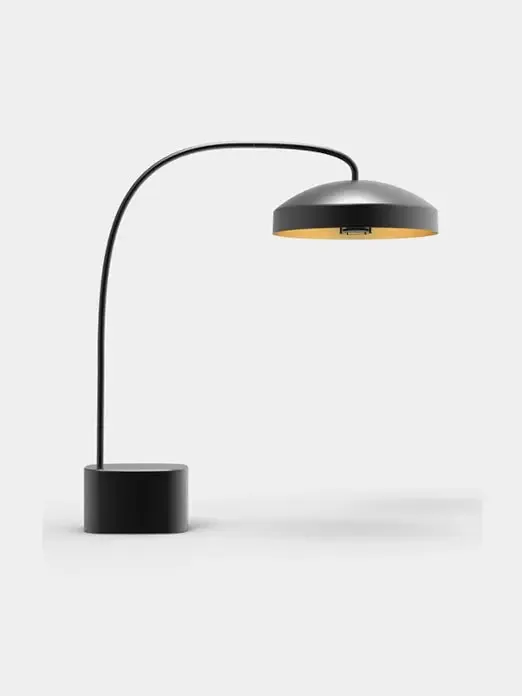
If your priority is a design-led outdoor room, think beyond whether heat is present. Consider whether the form preserves the view, keeps the floor clear, adds useful light, or becomes a considered part of the composition. The outdoor patio heater collection shows the range of ways warmth, lighting, and sculptural form can work together.
Read the structure as carefully as the product
A covered patio is not one condition. An open pergola, a deep porch, a solid roof, a louvered structure, and a canvas canopy all behave differently. Their materials, height, ventilation, and attachment points affect what can be mounted where. Do not assume that a heater can go under a cover simply because the patio is outdoors.
Measure the finished height from the floor where people sit and walk, not only from the surface of a beam. Include raised decks, dining tables, and the way a chair changes the occupied space. Then compare the dimensions with the exact manual. The same applies to walls, blinds, plants, umbrellas, and anything that can move into the heat zone. Our covered patio heater guide explains why the answer depends on the particular product and setting.

Think of structure as part of the outdoor room’s furniture plan. A good mounting position does not only meet the product’s instructions. It leaves the space legible, allows doors and chairs to work normally, and keeps the arrangement from feeling crowded.
Plan the electrical conversation early
The visible heater may be the last part of the project to arrive, but the electrical plan often decides how gracefully it can be installed. A fixed electric unit may require an assessment of the existing capacity, the route to the patio, the connection type, switching, and the location of controls. Larger or multi-heater plans need even more attention before anything is ordered.
A qualified electrician can review the model, rating information, existing electrical system, and proposed location together. That conversation is worth having before a beam is finished or a ceiling is closed. It helps avoid a beautiful outdoor room that ends up with an awkward control location, an unsuitable connection, or a heater selected before the electrical path was considered.
Electrical Safety Foundation International advises homeowners to check that outdoor outlets have appropriate ground-fault protection and to stay alert to moisture and outdoor conditions. Its home electrical safety guidance is a useful general reference, while the heater manufacturer and the qualified installer determine the requirements of a particular installation. Never treat an extension cord or power strip as a shortcut for a heater that is designed to be fixed or needs a different connection.
Place warmth where the chairs need it
Radiant outdoor heat works best when its direction, height, and coverage are planned around people rather than the perimeter of the patio. A dining table calls for a different approach than a reading chair beside the garden. Wind, openness, ceiling height, and the way people face each other change the experience as much as the nominal size of the patio.
Use a normal evening as the test. Pull the chairs out, open the door, walk the serving route, and imagine a guest moving through the space after dark. If the heater’s best position lands in a circulation path or too close to a movable element, the plan needs another pass. The patio heater size guide can help frame the comfort zone before you decide how much heat belongs in the room.
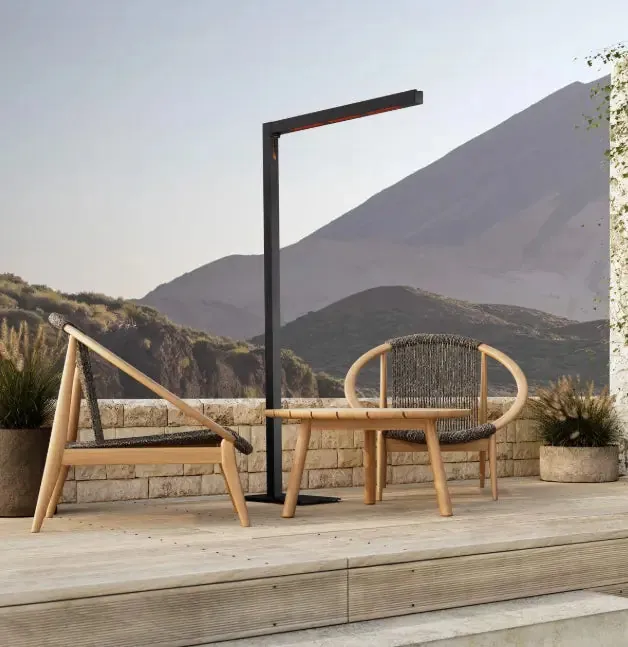
For an open or breezy setting, it is especially important to be honest about the seats you want to support. Trying to warm every edge of a broad terrace can lead to a compromised layout. A focused, well-considered zone usually gives people a stronger reason to stay outside.
Build safety into the layout
Clearances, footing, mounting, weather exposure, and use instructions are not afterthoughts. They are the conditions that make an installation viable. The exact requirements differ by model, which is why a generic number should never replace the current manual. Keep anything that can move, burn, or blow into the heat zone out of the plan from the beginning.
For portable electric heaters, the Electrical Safety Foundation International recommends keeping space heaters out of high-traffic areas and plugging them directly into a wall outlet rather than an extension cord or power strip. Its space-heater safety tips are a sensible baseline for portable use. A fixed outdoor heater has its own product-specific requirements, so do not substitute general tips for the manufacturer’s directions.
Home Crush’s patio heater safety guide gives a planning checklist for structure, footing, circulation, weather, and the exact model. If those conditions cannot all work together, choose a different location or a different product category. A graceful plan is safer and more enjoyable than a feature forced into the wrong spot.
Decide how you want to control the evening
Controls shape how a heater feels in everyday life. A switch that is hard to reach, a system that warms an unused zone, or a heater that cannot be managed with the rhythm of dinner makes even a good product feel less useful. During planning, decide whether the setting needs one simple control, a timer, a remote, or distinct zones for dining and lounging.
Keep this decision practical. The right control is the one that makes it easy to warm the seats in use and easy to turn the system off when the evening ends. The same applies to lighting. A heater that includes light can make the central gathering area feel more complete, but paths, steps, and serving areas still need their own appropriate illumination. Our patio lighting guide can help the layers work together.
Bring a clear brief to the first conversation
Good planning makes the first conversation with a retailer, designer, or electrician more useful. Bring a few photographs taken from the house looking out, from the garden looking back, and from the seats you want to improve. Note the ceiling or beam height, the material overhead, the approximate distance to the electrical panel, and whether the setting is open to wind or protected by a wall. If the patio is still being built, include the drawings before the finishes conceal the most straightforward route for power.
It also helps to name what is fixed and what is flexible. The dining table may have to stay where it is. The lounge might move a few feet. The preferred heater form might be a starting point rather than a final answer. These distinctions help the team test the right options instead of trying to make one visual idea solve every technical and spatial condition.
For a larger outdoor project, collect the questions that affect the whole room: whether shade will change through the day, whether a pergola needs light as well as warmth, and where guests naturally gather. The patio shade guide and patio furniture layout guide can help organize that wider plan before individual pieces are selected.
Finish with a real walkthrough
Before calling the plan complete, walk the patio as it will be used. Pull out every dining chair. Open doors fully. Bring a tray from the kitchen. Check the view from the seats. Look up from the floor level and identify anything that could enter the required clear area later, such as an umbrella, a hanging planter, or a seasonal decoration.
Then use the exact product instructions and installer’s advice to confirm the final position, mounting, connection, controls, and care routine. If a temporary workaround is the only way to make the heater fit, pause. The best outdoor heater installation should make the room easier to enjoy, not introduce a new list of rituals and obstacles.
Home Crush can help place warmth within the wider decisions that make an outdoor room work: furniture, light, shade, circulation, and the mood of the space after dark. Explore Heatsail outdoor comfort systems, see Heatsail for pergolas, or talk with the design team about an outdoor setting that feels as good to use as it does to see.
Plan the seats before the system
A successful outdoor heater installation begins with the people who will use the space. Define the gathering, verify the exact product requirements, involve the right professional early, and let the final location serve the room rather than interrupt it.
Frequently asked questions
Do outdoor heaters need professional installation?
A fixed, hardwired, higher-powered, or multi-heater setup should be evaluated and completed by a qualified electrician. A portable model still needs the exact product instructions, an approved outdoor location, a stable surface, and a power connection that is appropriate for that model.
Can an outdoor heater go under a covered patio?
Sometimes, but that answer belongs to the exact heater and the exact structure. The current manufacturer instructions determine whether the product can be used under a cover, its mounting orientation, and the clearances that must remain open around it.
Where should an outdoor heater be placed?
Start with the seats you want to make comfortable, then check how people walk through the room, how chairs pull back, where wind enters, and what the product instructions allow. A heater should support the gathering without becoming an obstacle.
Do I need a dedicated circuit for an outdoor heater?
It depends on the heater’s rating, connection type, and the capacity of the existing electrical system. A qualified electrician can assess the equipment and the home before any fixed installation is planned.
Related posts
Outdoor living
Patio Heater Placement for a Better Outdoor Room
A practical guide to placing outdoor heat where people gather, while keeping the patio comfortable, clear, and safe.
Read article
Outdoor living
Patio Heater Size Guide: Plan Heat for the Seats You Use
A practical patio heater size guide for choosing warmth around the seats you use, the structure you have, and the outdoor room you want to enjoy longer.
Read article
Outdoor living
Patio Heater Safety: A Practical Planning Guide
A practical patio-heater safety guide for checking the structure, clearances, footing, circulation, weather, and the exact instructions that apply to your model.
Read articleOutdoor living
How to Keep a Patio Warm in Winter
A practical guide to making a patio feel warmer in winter, with a better gathering zone, wind protection, light, soft layers, and considered heat.
Read article