

Patio heater size is less about covering every square foot outside and more about making the seats people choose first feel comfortable after sunset. A small, well-planned dining table can feel genuinely warm with the right focused heat. A large, exposed yard can swallow a bigger heater without ever feeling settled.
Start with the gathering, then work outward. Notice where guests sit, where a chair pulls back, where the wind reaches the terrace, and what is overhead. That gives you a useful brief for comparing heaters, rather than a misleading race for the largest output number.
1. Size the comfort zone before the heater
Choose one job for the heater. It may be a six-seat dinner table, a pair of lounge chairs, or the end of a sectional where everyone gathers after a meal. Measure that area with the furniture in its normal position, including the room needed to pull out chairs and walk past the seating.
Then look at what makes the space harder to warm. An open coastal breeze, a high roof, a wide gap between chairs, and a patio that spills directly into the garden each change the answer. The heater should serve the people in that zone, not attempt to heat an undefined area around it. Our patio heater placement guide helps map circulation and seating before you choose a final location.
This is also why a smaller, intentional gathering zone can feel more inviting than a patio crowded with equipment. The best plan gives the most-used seats warmth, keeps the view open, and still leaves a clear path to the house.

2. Use output numbers as a comparison tool, not a promise
Fuel-burning patio heaters commonly list output in British thermal units, or BTUs. Electric heaters commonly list watts. Both figures tell you something about the equipment, but neither tells the whole story of how a particular patio will feel.
For electric heat, the useful calculation is straightforward: watts multiplied by the hours used, then divided by 1,000, gives kilowatt-hours. Multiply that number by your electricity price per kilowatt-hour to estimate the full-output cost for an hour. The Department of Energy’s energy education guide explains the same calculation. It is useful for budgeting, but it does not replace a proper placement plan.
For fuel-burning equipment, the number on the box is not a universal coverage rating either. The model’s instructions, the degree of enclosure, wind, clearances, and how close the seats are matter more than a number borrowed from another patio. The Consumer Product Safety Commission warns against using outdoor heaters indoors, and the exact manual remains the right source for the model’s approved setting and clearances.
3. Match the heater form to the room
Once the seating zone is clear, choose a form that makes the room easier to use. Freestanding heaters can be flexible, but need stable footing and a location outside the natural walking path. Wall-mounted heaters can be useful along a solid edge. Overhead fixtures can keep the floor clear when the structure, electrical plan, and product instructions support them.
- Dining table: Start with the chairs, table ends, and service path. The heat should support the seats without turning chair pull-out into a negotiation.
- Lounge group: Keep the focus on the sofa or chairs that face one another. A defined conversation area is usually a better target than the whole terrace.
- Covered patio: Measure the actual roof, beams, open sides, and nearby materials. Read the exact model instructions before treating any cover as compatible.
- Open garden or pool edge: Expect more heat loss from wind and distance. A closer, concentrated seating group often works better than trying to stretch one source across the landscape.
If you are deciding between electric, gas, or another heat source, our electric patio heater guide and infrared patio heater guide explain how focused radiant heat changes the decision.
Make a simple patio-heater sizing sketch
You do not need an elaborate drawing. A sheet of paper, a tape measure, and a few minutes on the patio will do. Draw the perimeter of the area, then add the table or seating in its real location. Mark the door, the lowest point of the roof, the nearest power location, umbrellas, and the route people take through the space.
Circle the seats that need warmth. Those circles are more useful than an empty rectangle labeled with the patio’s total dimensions. A dinner party may use every chair at the table. A normal weekday evening may use only two lounge chairs. A good heater plan can respond to the use that happens most often, while leaving the room flexible for a larger gathering.
Bring the sketch when you compare models. It gives a retailer or installer something real to respond to: whether the proposed form reaches the seats, whether the mounting position protects circulation, and whether the required space around the heater can remain clear. If the answer depends on pushing a chair out of the room or closing an umbrella every time, treat that as a useful signal to rethink the plan.
Three sizing mistakes that make a patio feel colder
Starting with the yard instead of the gathering. A patio is not a warehouse. Most evenings have a center of gravity, whether that is the dinner table, a sofa, or a pair of chairs facing the garden. Heating that defined place first creates more comfort than scattering equipment around a large open area.
Ignoring the air that moves through the space. A heater can be technically powerful and still feel underwhelming when wind carries warmth away from the seats. Watch how a napkin, candle flame, or light throw behaves at the time of day you care about. That small observation can change the best location, the furniture arrangement, or the expectation for how large the zone should be.
Choosing the location after the furniture is set. Treat the heater as part of the layout, along with light, side tables, and movement. The patio furniture arrangement guide can help clarify conversation distance and circulation before a heater is asked to fit into the only space left over.
4. Read the structure and the weather honestly
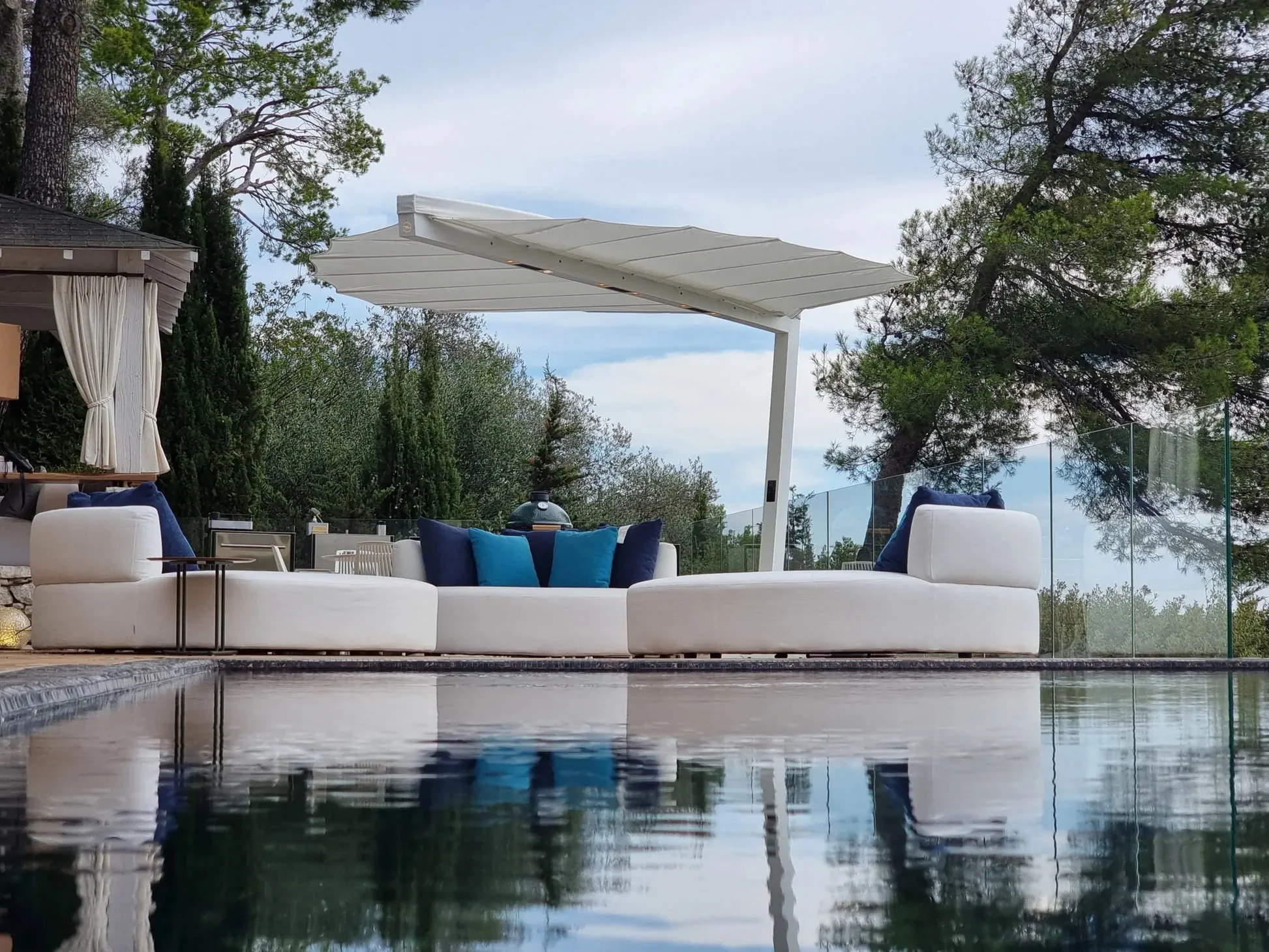
The same heater can feel very different under a generous open-sided pergola than on a windy deck. Look above the planned location, then look to the sides. Roof height, walls, screens, an umbrella, plants, and nearby fabrics all affect both comfort and safe use.
For any heater under a roof or near a structure, the exact manufacturer instructions are the final word. There is no safe universal clearance number, and a photograph of someone else’s setup is not approval for yours. Our guide to using a patio heater under a covered patio can help you identify the questions to bring to the model documentation and qualified installer.
Watch the patio at the time you want to use it. Notice where wind comes through, which seats cool first, and whether the door, umbrella, or furniture moves. A couple of real evenings of observation often produces a better plan than a broad coverage estimate ever could.
Compare models on the details that change your patio
Once you know the comfort zone, compare the details that will shape daily use. Look at the model’s intended setting, mounting options, stated clearances, weather suitability, control method, power or fuel requirements, and the way it directs warmth. A beautiful form is a valid consideration, especially when it stays visible year-round, but it should support a heater that works with the room.
For an electric fixture, confirm the electrical plan before falling in love with a position. For a portable unit, check that the base has a stable, out-of-the-way home. For any fuel-burning option, check the model’s outdoor-use conditions and all manufacturer guidance. The CPSC’s heater safety advice reinforces the importance of keeping heaters away from materials that can burn.
Do not compare products only by a claimed coverage area. One product’s claim may assume a protected setting while another may describe a more open one. Comparing the manual, the intended mounting height, and your own sketch gives you a much more honest basis for the choice.
5. Keep safety and comfort in the same plan
A heater that fits the room should not force people to work around it. Keep the required clearance zone open, preserve a stable base or approved mounting, and leave routes clear for guests, children, pets, and serving. If cushions, umbrellas, or chairs have to be moved every time the heater is used, the location is probably not doing its job.
Before buying, read the exact manual. Before installing, compare its mounting, power, weather, and clearance requirements with the real patio. The patio heater safety planning guide walks through the practical checks, including structure, circulation, and weather.
For a fixed electric heater, bring in a qualified electrician or installer when the product and local requirements call for one. That is not an extra flourish. It is how the power, mounting, controls, and setting become part of a plan that works on an ordinary evening as well as on the day it is installed.
6. Decide whether one zone or two will serve you better
Some patios naturally have more than one use. A dining table may need a warm zone near the house, while a lounge needs a separate place to settle later in the evening. Do not assume one larger heater is the answer. Two smaller, clearly defined zones can be more comfortable, more flexible, and easier to arrange, if the structure and product guidance allow it.
Start with the zone that matters most. Live with it for a few evenings before adding another. This keeps the decision grounded in how the patio is actually used, rather than in a plan that tries to solve every possible gathering at once. For broader cool-weather ideas, see how to keep a patio warm in winter.
Use a real evening to check the decision
Before committing to a permanent location, stand in the intended seats at the time you want to use the patio. Look for glare, breezes, low branches, a door that swings into the area, or a route guests naturally take around the table. The most successful outdoor rooms tend to feel simple because these practical details were settled before the finishing layer went in.
It can help to imagine the room in motion. Someone is carrying dinner from the kitchen. Someone else is pulling back a chair. A child is heading toward the garden. Where does the heater sit in that story? If it supports the seats while staying out of everyone’s way, it is likely in the right neighborhood. If it becomes an obstacle, choose a different form or a tighter gathering zone.
Bring warmth, light, and layout together
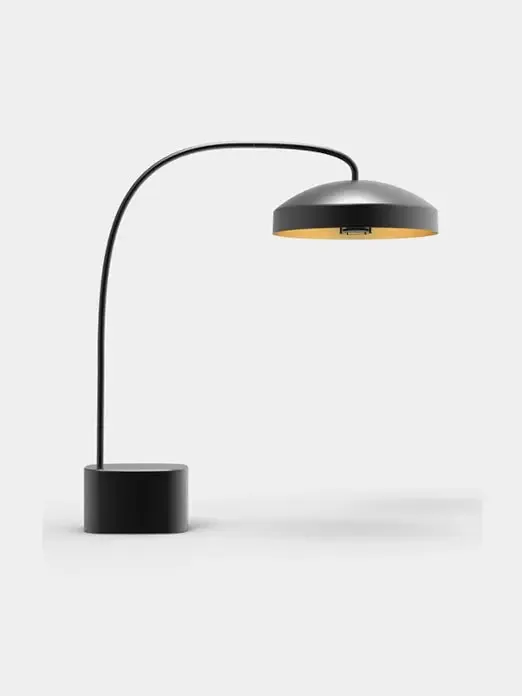
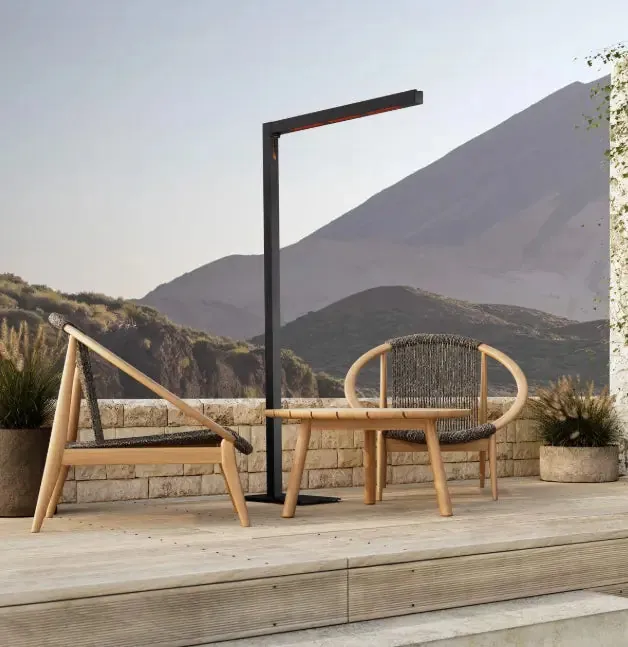
Home Crush approaches outdoor comfort as part of the room, not a large object added after everything else is decided. The Heatsail collection combines electric radiant heat and light in forms that can complement an intentional dining or lounge zone. Explore the available outdoor patio heaters, or share photos and rough dimensions with the design team to talk through the seats, structure, and atmosphere you want to support.
The goal is simple: choose heat that earns its place in the room. When the size, position, and setting work together, people can stay outside longer without the patio feeling crowded or compromised.
Start with the seats, not the square footage
Mark the gathering zone, study wind and structure, then compare the exact model’s guidance with the real patio. A heater that serves a clear place to sit will usually feel better than one asked to warm everything outside.
Frequently asked questions
What size patio heater do I need?
Choose the heater around the seating zone you want to make comfortable, not the total square footage of the yard. The exact model’s stated coverage, mounting height, clearance requirements, wind exposure, roof, and the number of people using the area all affect the right choice.
How many BTUs do I need for a patio heater?
BTUs are one way fuel-burning heaters describe output, but they are not a universal sizing shortcut. A larger number does not automatically make an open, windy patio more comfortable. Compare the exact model’s intended use and coverage with the real dining or lounge zone, then follow its installation and clearance instructions.
How many watts should an electric patio heater have?
Start with the manufacturer’s coverage guidance for the exact heater, then compare it with your seating layout, roof height, mounting position, wind, and power plan. Watts describe electrical input, but a higher number does not replace putting radiant heat where people actually sit.
Can one patio heater warm a whole backyard?
Usually, one heater works best when it serves a defined gathering zone. A whole open yard loses heat quickly, especially in wind. A well-sized dining or lounge area often feels more generous and useful than a scattered attempt to warm every corner.
Related posts
Outdoor living
Patio Heater Placement for a Better Outdoor Room
A practical guide to placing outdoor heat where people gather, while keeping the patio comfortable, clear, and safe.
Read article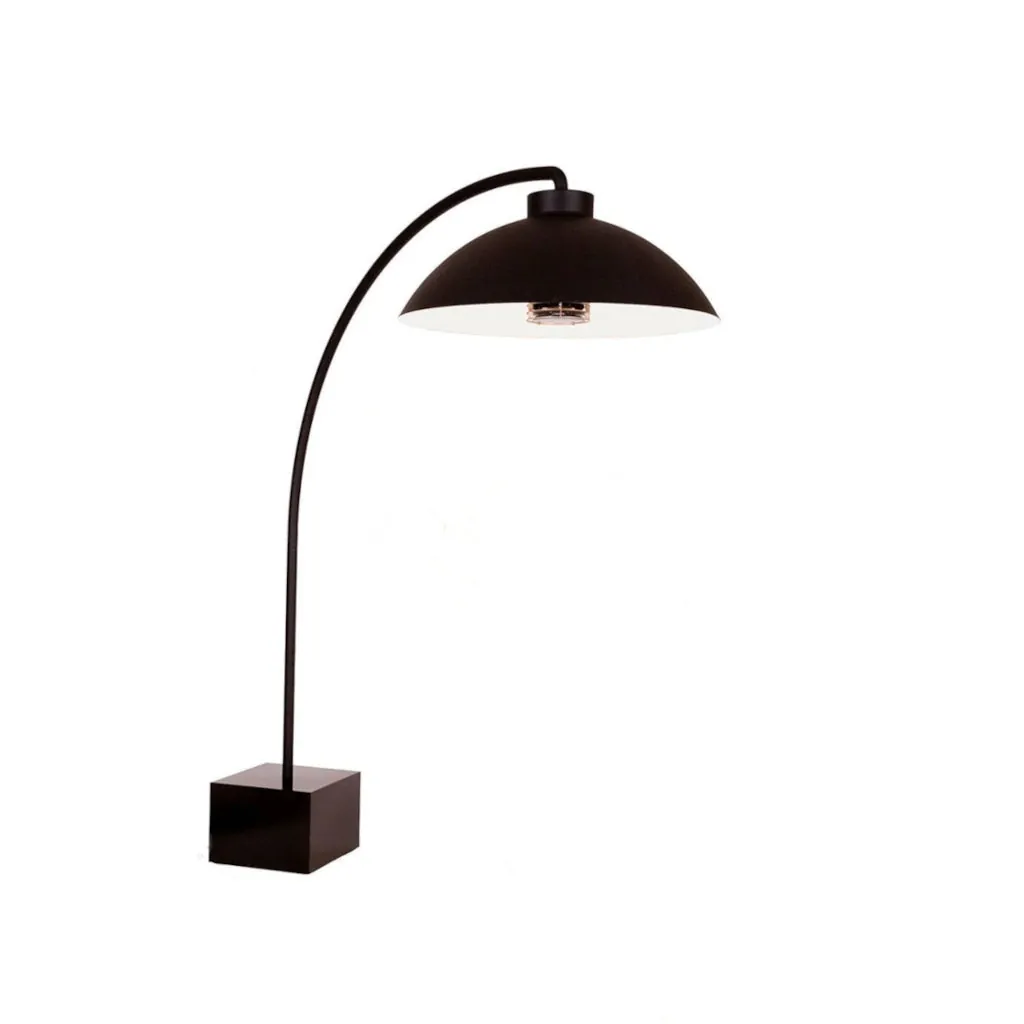
Outdoor living
How to Choose an Electric Patio Heater
A practical guide to choosing electric outdoor heat around the seats you use, the structure you have, and the evenings you want to extend.
Read article
Outdoor living
How Infrared Patio Heaters Work for Outdoor Rooms
A practical guide to infrared patio heat, from focused comfort zones and placement to choosing a form that belongs in the room.
Read article
Outdoor living
Can You Use a Patio Heater Under a Covered Patio?
What to check before adding warmth beneath a pergola, porch roof, or covered terrace, from clearances to the right heater for the room.
Read article