
An electric patio heater can make the table, lounge, or corner of a terrace feel usable long after the sun has gone down. The useful question is not whether it can heat every square foot outside. It is whether it can make the seats people choose first feel comfortable, without giving up the circulation, view, or calm of the outdoor room.
That distinction makes the buying decision much clearer. Electric radiant heat is directional, so placement, mounting, power, and the shape of the gathering matter as much as the heater’s appearance. Start with the room you have and the evenings you want to extend. Then use the exact product documentation and qualified local help to settle the electrical and installation details.
Start with one gathering zone
Mark the places where people naturally settle after dark. It could be the end of a dining table, a pair of deep chairs near the garden, or a sofa beneath a pergola. Those seats are the job. A patio heater is usually more satisfying when it serves a defined group than when it is expected to chase warmth across a wide, exposed yard.
Think of the patio in zones. A dining zone needs warmth that reaches the chairs without interrupting chair pull-out or service from the house. A lounge zone needs a clear center for conversation and a comfortable route to the door. A poolside zone may need a fixture that protects the view and keeps the floor open. The patio heater placement guide is a useful next step once you know which seats matter most.
This approach also keeps the room from becoming crowded. One well-considered warm zone can make a cool evening feel generous. Adding more equipment before the first zone works often makes a patio feel busy without making it more inviting.
A five-minute pre-purchase check
Before comparing finishes, make a small list for the patio. Note the seats you want to warm, the lowest point above them, the nearest practical power location, the routes people take from the house, and whether the furniture stays put or moves for different gatherings. Take a photo from each corner at the time of day you expect to use the space. A sunset photo often reveals glare, shade, and sightlines that disappear in a bright daytime image.
Bring that list to the product conversation. It will quickly separate a heater that looks good in a catalog from one that belongs in the room. It also gives an electrician, installer, or design professional the information needed to flag an issue before it becomes an expensive change. The aim is not to make the decision complicated. It is to make sure the comfort layer feels effortless once the table is set.
Know what electric radiant heat does well
Outdoor electric heaters are commonly measured in watts, rather than the BTUs used for fuel-burning heaters. The important practical difference is how radiant heat works. It is directed toward people and surfaces in its path, which is why the heater needs a clear relationship to the dining table or seating area it is meant to support.
A patio-heater guide from Home Depot similarly distinguishes electric heater output in watts and describes electric infrared heat as energy absorbed by nearby people and objects. That makes a defined terrace, covered dining area, or thoughtfully arranged lounge a more natural starting point than a large, windy lawn.
There is no universal coverage number worth trusting across every patio. Roof height, open sides, coastal wind, furniture placement, and the particular model all change the result. Treat published coverage claims as a starting point, then compare them to your actual plan and the manufacturer’s instructions.
Choose the form around the room
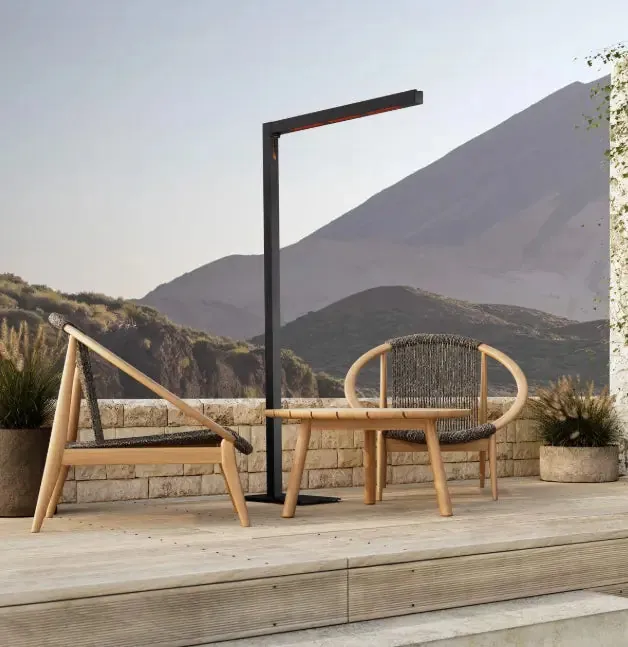
Electric patio heaters come in several forms, and the best one is the one that respects the room’s architecture and daily use. A portable unit can make sense when furniture moves or when you are testing where warmth belongs. A wall-mounted option can suit a narrow edge. An overhead fixture can preserve valuable floor space when the structure and clearances allow it.
- Freestanding: Consider this when flexibility matters and the patio has a stable location outside the main walking path.
- Wall-mounted: Useful for a narrow terrace or a solid edge where the heater can face a defined seating zone.
- Ceiling or pendant-mounted: A strong option when the roof is appropriate and keeping the floor clear helps the room work better.
- Integrated outdoor comfort: Worth considering when light, shade, and warmth need to work together instead of competing for space.
The form is not merely a style preference. It changes what must be measured, where people can walk, and how much of the room stays visually quiet. Before falling for a fixture, sketch the doors, table, chairs, beams, fans, and the path between the house and garden.
Measure before choosing a model
A photo rarely shows the limits that decide whether an electric patio heater belongs in a space. Measure the lowest point overhead, the width and depth of the actual gathering zone, the distance to doors, and the routes people use while dining or carrying a tray. Include anything that changes the ceiling condition: beams, ceiling fans, fabric, vines, lighting, and an awning.
Then bring the exact heater documentation into the conversation. Mounting height, clearances, weather rating, electrical supply, and service access are model-specific. They are not details to settle after the furniture is ordered. A good plan uses the product manual to rule out unsuitable positions early, before the room has been arranged around an assumption.
The covered patio heater guide walks through the special questions a roof, pergola, or overhang introduces. If the space is exposed, spend time there on the type of evening you want to enjoy. Notice where wind enters and which seats become uncomfortable first. That observation often matters more than a room-size calculation.
Plan the power honestly
Power should be part of the first conversation, not a surprise at the end. Some portable electric heaters use a standard outlet. More substantial fixed heaters may require a dedicated circuit, specific voltage, controls, and professional installation. Check the listing and manual for the exact product, then let a qualified electrician confirm what the home can support.
A current electric patio heater guide from Woodland Direct notes that higher-output electric heaters commonly need higher-voltage wiring and professional installation. It also explains why wall and ceiling-mounted systems are generally used to direct heat toward a specific area. That is another reason to plan around the seats, not an abstract total patio size.
Controls deserve a little thought too. A simple switch may be enough for a small patio. Larger outdoor rooms can benefit from independently controlled zones, so the dining table is comfortable without treating the entire terrace as one setting. Choose the system that supports the way the room is actually used, rather than adding controls only because they sound impressive.
Keep safety and clearances non-negotiable
Electric does not mean casual. The heater, cord or wiring, outlet, mounting surface, and surrounding materials all need to meet the manufacturer’s instructions. Never treat a neighbor’s installation, a product photo, or a generic measurement as approval for a particular patio.
The U.S. Consumer Product Safety Commission’s portable-heater guidance recommends inspecting the heater, cord, and plug, keeping combustible materials away, avoiding extension cords and power strips, and using a stable location for portable heaters. The exact patio heater manual remains the final word, especially for outdoor rating, mounting, clearance, and maintenance.
For a permanent project, the best time to involve qualified help is before the location feels fixed. A professional can verify electrical capacity and installation conditions while there is still room to adjust the layout. That is much easier than trying to make a heater fit once the dining area, planting, and lighting have already been finalized.
Compare operating cost with a real number
Operating cost is straightforward to estimate once you know the heater’s wattage and your electricity rate. Divide the wattage by 1,000 to convert it to kilowatts, then multiply by the rate per kilowatt-hour on your utility bill. For example, a 3,000-watt heater running at full output for one hour uses 3 kilowatt-hours. Multiply that by the current utility rate to estimate the hourly cost.
This is more useful than a broad claim that one heater is “cheap” or “expensive” to run. It lets you compare the exact product, the way you expect to use it, and the control options available. It also reinforces the value of a focused comfort zone. Heating the seats that are occupied is usually a better use of energy and space than trying to warm every edge of the patio.
Consider heat as one layer of the outdoor room
The best outdoor rooms do more than survive a chilly evening. They make people want to stay. That usually means the furniture defines a comfortable gathering, the lighting makes faces and pathways easy to read, shade helps during the day, and warmth supports the hour after dinner. When each need is solved separately, the result can feel like a collection of equipment. When they are planned together, the patio feels settled.
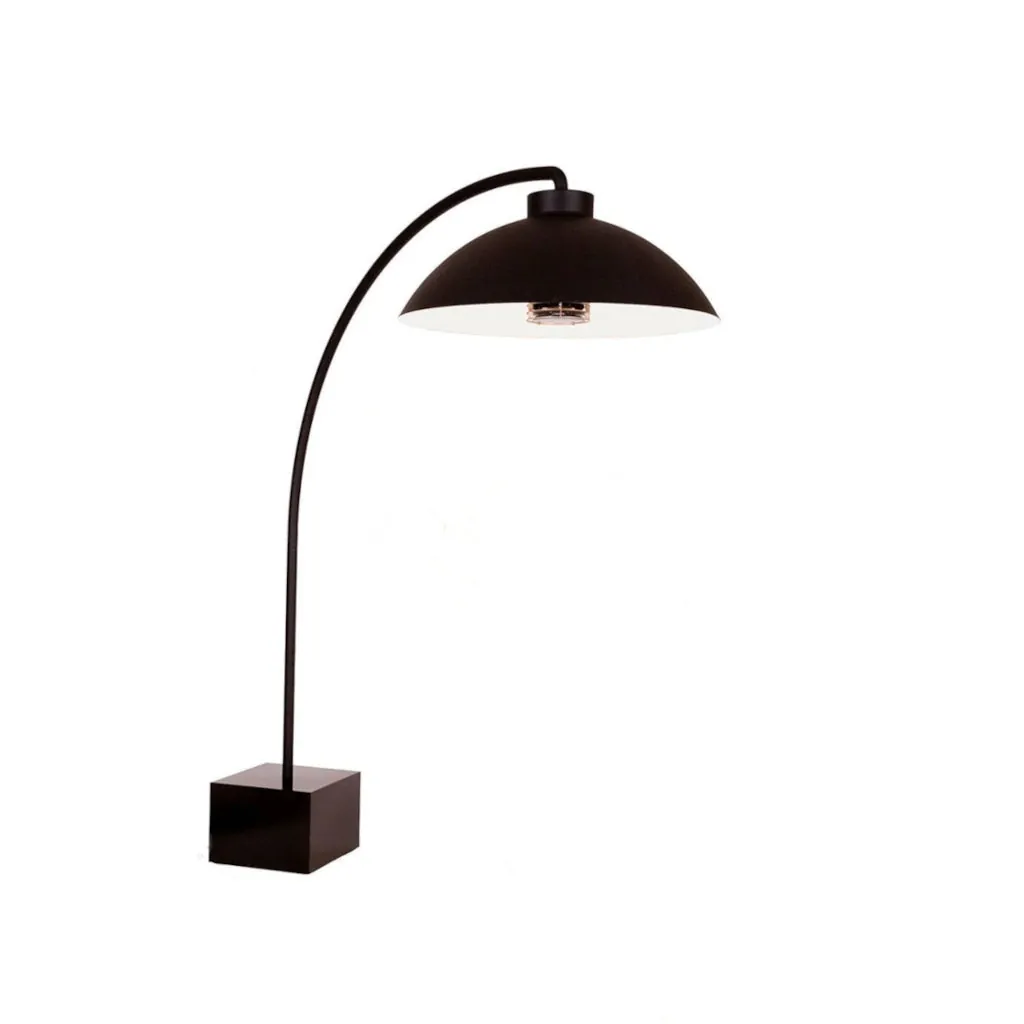
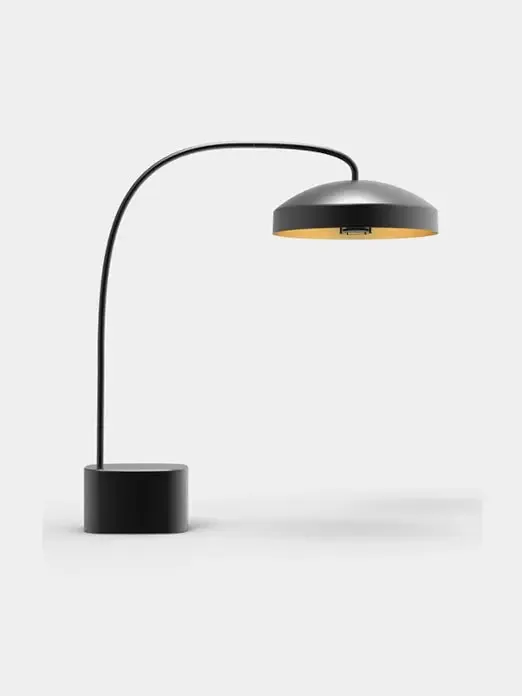
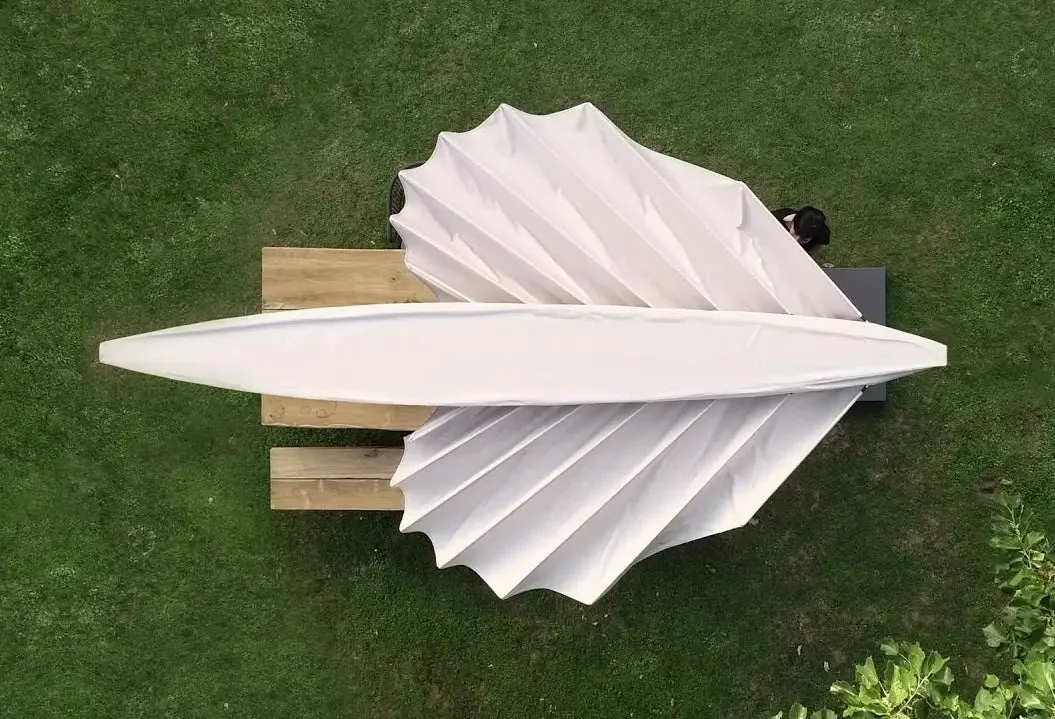
Home Crush’s Heatsail collection is particularly compelling for this kind of project because it brings electric radiant heat into designs that can also include light, and in the case of LEAF, shade and misting. DISC is an example of heat and dimmable light combined in one outdoor fixture. The right product still depends on the structure and installation conditions, but the broader advantage is a patio that feels composed rather than crowded.
Plan for evenings that run long
Bring Home Crush a few photos, rough measurements, and a note about the seats you want to make comfortable. The studio can help you explore outdoor heaters, compare the Heatsail collection, and build an outdoor room around the way you gather.
Frequently asked questions
Are electric patio heaters good for outdoor spaces?
Electric radiant heaters can be a good fit for the part of a patio where people actually sit, especially when a nearby power plan and the model’s stated installation conditions support the layout. They are most useful when the heater can be aimed or positioned around a defined dining or lounge zone rather than asked to warm an entire open yard.
Do electric patio heaters need a dedicated circuit?
The answer depends on the exact heater and its power requirements. Many substantial fixed outdoor heaters need professional electrical planning, while some portable models use a standard outlet. Check the product documentation first, then have a qualified electrician confirm the circuit, wiring, controls, and outdoor conditions before a permanent installation.
Can an electric patio heater go under a covered patio?
Some models are designed for covered settings, but the heater’s own instructions determine whether a particular roof, ceiling height, mounting position, and clearance arrangement are suitable. A covered patio should never be approved by a general rule of thumb or by copying a photo online.
How much does an electric patio heater cost to run?
Start with the heater’s wattage and the electricity rate on your utility bill. Divide watts by 1,000, then multiply by the local price per kilowatt-hour to estimate the cost for one hour at full output. A dimmer or zoned control can make the setting easier to tune to the evening, but it does not replace choosing the right heater and location.
Related posts
Outdoor living
Can You Use a Patio Heater Under a Covered Patio?
What to check before adding warmth beneath a pergola, porch roof, or covered terrace, from clearances to the right heater for the room.
Read articleOutdoor living
Patio Heater Placement for a Better Outdoor Room
A practical guide to placing outdoor heat where people gather, while keeping the patio comfortable, clear, and safe.
Read article
Outdoor living
Patio Lighting Ideas for Evenings Outside
A practical guide to layering patio light for dinner, conversation, safe movement, and an inviting after-dark glow.
Read article