
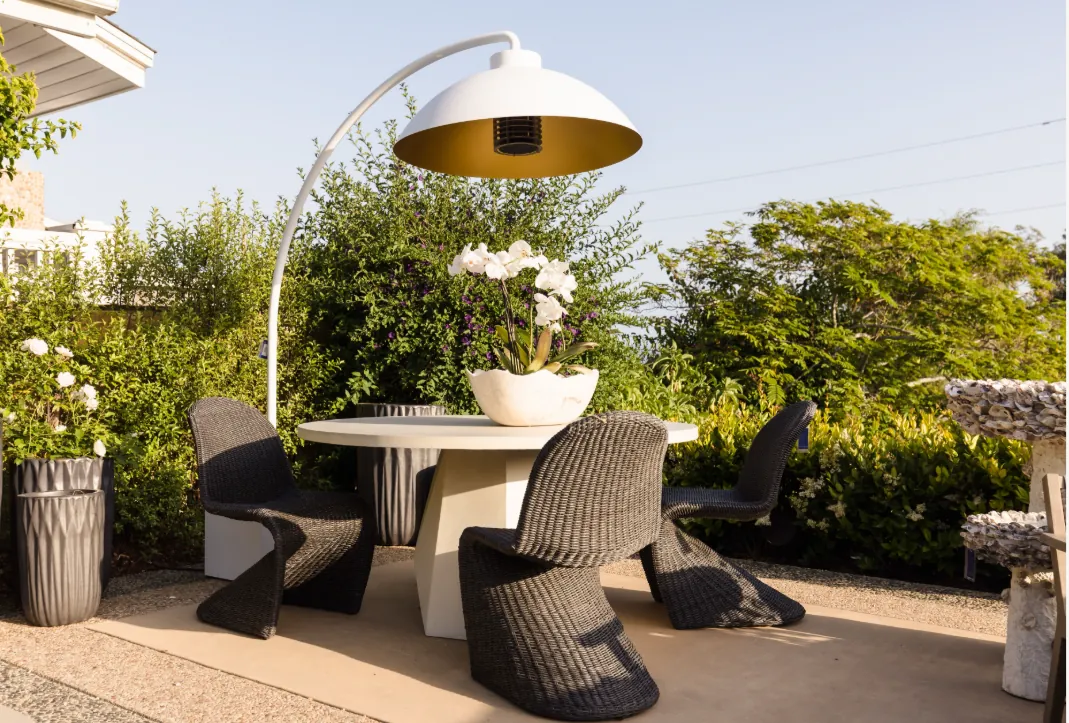
Choosing patio furniture materials is less about finding one universal winner and more about matching a piece to the life it will have. A sheltered courtyard, a sunny roof deck, a poolside terrace, and an exposed coastal patio can all call for different answers. The furniture should feel good to use, look right with the house, and stand up to the conditions without turning into a weekend job.
Start with the setting, then narrow the material. Think about direct sun, fog, salt air, wind, wet swimsuits, falling leaves, and how often you want to move furniture around. Next, consider the room you are making. A dining table asks for a different feel than a low lounge. Once those two things are clear, it becomes much easier to choose pieces that make the outdoor space feel intentional instead of pieced together.
1. Read the patio before you shop
Before comparing materials, pay attention to what the patio does across a normal week. Is there bright afternoon sun? Does the marine layer leave moisture behind in the morning? Is the terrace exposed to wind, or tucked behind a wall? A material that feels effortless under a covered loggia can need more attention on an open bluff or beside a pool.
In Santa Barbara, the light and outdoor lifestyle make it tempting to treat every patio as easygoing. But coastal conditions are real. Salt, windblown grit, pollen, and long stretches of sun all ask something of finishes, fabrics, and hardware. The practical answer is not to avoid beautiful materials. It is to choose them with eyes open and give the most exposed pieces a little more thought.
Make a short list before you buy: where the furniture will sit, who will use it, what months matter most, and how much maintenance feels realistic. That list is more useful than a material label on its own. It keeps you from buying a delicate indoor-looking set for a hard-working patio, or an indestructible set that never feels inviting enough to use.
2. Aluminum is light, adaptable, and easy to live with
Aluminum is often the practical choice for chairs, dining bases, and lounge frames because it is light enough to move and does not rust like iron or steel. Its natural oxide layer helps protect the metal, though a painted or powder-coated finish still deserves care, especially near the ocean. Regular rinsing and a gentle wash keep salt and grime from sitting on the surface.
Look past the word “aluminum” and inspect the whole piece. A strong frame, stable welds, quality hardware, and a finish that feels evenly applied tell you more than a dramatic color name. A lightweight chair can be wonderful for rearranging a table, but on a windy terrace it should still feel grounded. Test it the way you would use it: lift it, sit in it, move it, and notice whether it feels composed or flimsy.
Aluminum also makes sense when you like to reset the patio for dinner, cocktails, or a larger gathering. It is a flexible material that lets a space evolve. Pair it with cushions, woven details, or a wood-topped table when you want to soften its cleaner lines.
3. Teak and other woods bring warmth, with honest upkeep
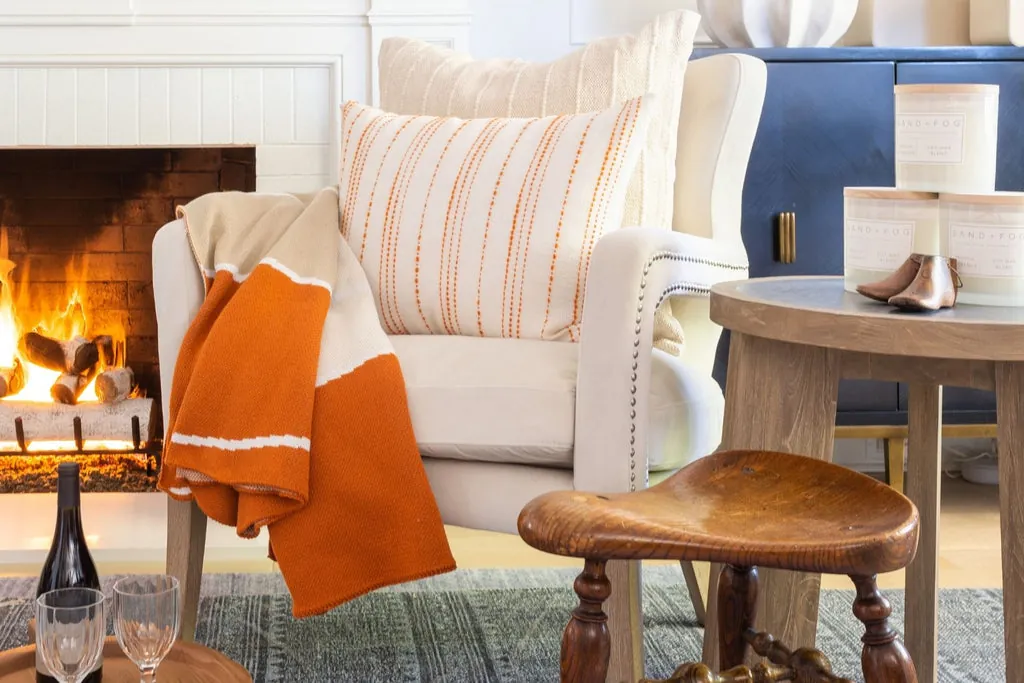
Wood changes the emotional temperature of an outdoor room. A teak dining table, slatted bench, or warm-toned lounge frame can make a terrace feel settled into the landscape. Teak is valued for its density and natural oils, as noted in this wood reference, but it is not maintenance-free. Sun, moisture, and time will shift its color, and that soft silvery weathering can be beautiful when it is expected rather than treated as a surprise.
Choose wood when you want the grain and patina to be part of the story. If you want it to keep a newly oiled golden tone, plan to maintain it according to the maker's guidance. If you prefer the quieter gray it develops outdoors, let it weather evenly and keep the surface clean. The important thing is consistency. Occasional, aggressive treatments tend to make a piece feel fussier than a simple regular clean.
Wood furniture is especially good for a patio that already has natural materials nearby: stucco, stone, planting, woven shades, or a garden edge. It can also bring balance to a home with a lot of metal, glass, or smooth hardscape. On a small balcony, use it as the warmer accent rather than filling every surface with the same finish.
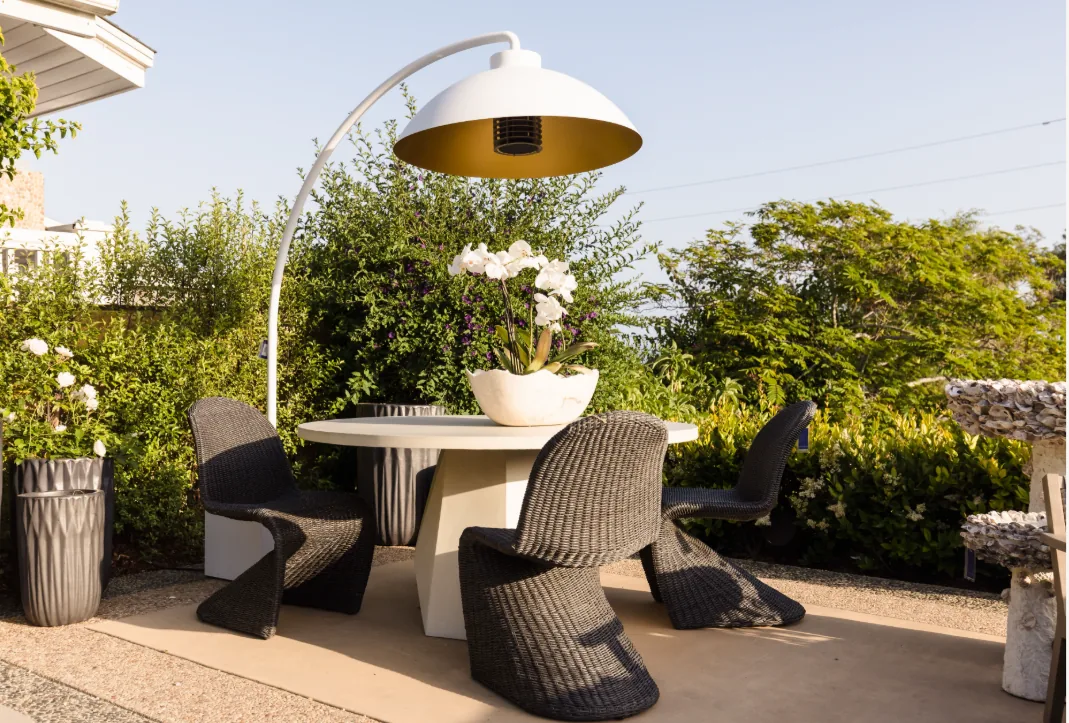
4. Woven resin is about texture, not just durability
Good woven resin furniture can bring an easy, relaxed texture to an outdoor lounge. It works particularly well for deep seating, occasional chairs, and dining pieces that need more softness than a metal frame alone can offer. The best versions look deliberate up close, with a consistent weave, thoughtful proportions, and cushions that belong to the frame rather than merely perch on top of it.
The difference between a lasting woven piece and a disposable one is usually in the frame, weave quality, and cushion construction. Look for a sturdy interior frame, even tension in the weave, and feet or glides that keep the furniture from sitting directly in standing water. Give the surface a quick rinse and brush out trapped debris before it settles into the texture.
Woven resin is a useful bridge when the architecture feels crisp but you want the seating area to feel more generous. Keep the number of woven pieces edited. One sofa and a pair of chairs can feel relaxed; an entire patio in the same bulky weave can lose shape and make a small space look crowded.
5. Recycled plastic and composite lumber suit low-maintenance zones
Furniture made from recycled plastic or composite lumber is useful where the priority is straightforward care. It can be a good answer around a pool, on a family patio, or in a rental setting where furniture will be moved often and exposed to wet feet, sunscreen, and casual meals. The appeal is simple: these pieces tend to be substantial, easy to clean, and unconcerned with a little weather.
That does not mean every plastic outdoor piece looks the same. Shape, color, and proportion still matter. A well-scaled Adirondack chair can look right near a fire pit, while a chunky dining set may overwhelm a narrow terrace. Check the visual weight as carefully as the material. A furniture set has to earn its square footage.
This material is often best used where durability needs to be obvious and comfortable, not precious. Choose colors that work with the house and landscape rather than trying to imitate wood too closely. Let the material be what it is, then bring warmth through cushions, a rug made for exterior use, planting, and lighting.
6. Steel and iron need the right setting
Steel and iron can give a patio real presence. They are useful for slim dining chairs, sculptural tables, benches, and pieces where weight helps the furniture stay put. Their downside is that exposed metal and damaged finishes can invite rust, particularly in damp or salty conditions. The American Galvanizers Association's overview of galvanized steel protection is a useful reminder that the protective finish matters as much as the metal beneath it. They work best where the finish is well maintained and the furniture is not constantly sitting in wet debris.
A powder-coated steel chair under a covered porch is a different proposition from an untreated iron bench facing the ocean. Inspect seams, feet, and joints, because those are the places where moisture tends to linger. If the finish chips, address it before the issue spreads. A small touch-up is far easier than a full rescue later.
Use metal for contrast. A dark metal dining base can anchor a pale stone patio. A slim iron side table can sharpen a deeper, softer lounge. The goal is not to make the entire space industrial. It is to give the room a little structure around its softer pieces.
7. Cushions are a material decision too
The frame gets attention first, but cushions determine whether people stay outside. Choose outdoor-rated fabric, comfortable fill, and covers that can be cleaned without a complicated ritual. Ask how the cushion handles water, whether it dries quickly, and if the covers can be removed. A beautiful sofa with slow-drying cushions can turn an easy afternoon into an inconvenient one after the first damp morning.
Color deserves practical thought. Pale fabrics can look luminous in California light but show sunscreen, food, and everyday use more quickly. Dark fabrics can feel rich, though they may get hot in direct sun. Mid-tones, textured weaves, and removable covers often give a patio the most grace over time. The right answer depends on how formal the space needs to be and whether children, dogs, or pool guests use it regularly.
Keep loose cushions simple to manage. Store them during heavy weather, brush off leaves before they stain, and follow the fabric maker's cleaning guidance rather than experimenting with strong products. Sunbrella's maintenance guidance is a useful example of why regular, light cleaning is better than waiting for a deep clean.
8. Build a room, not a material sample board
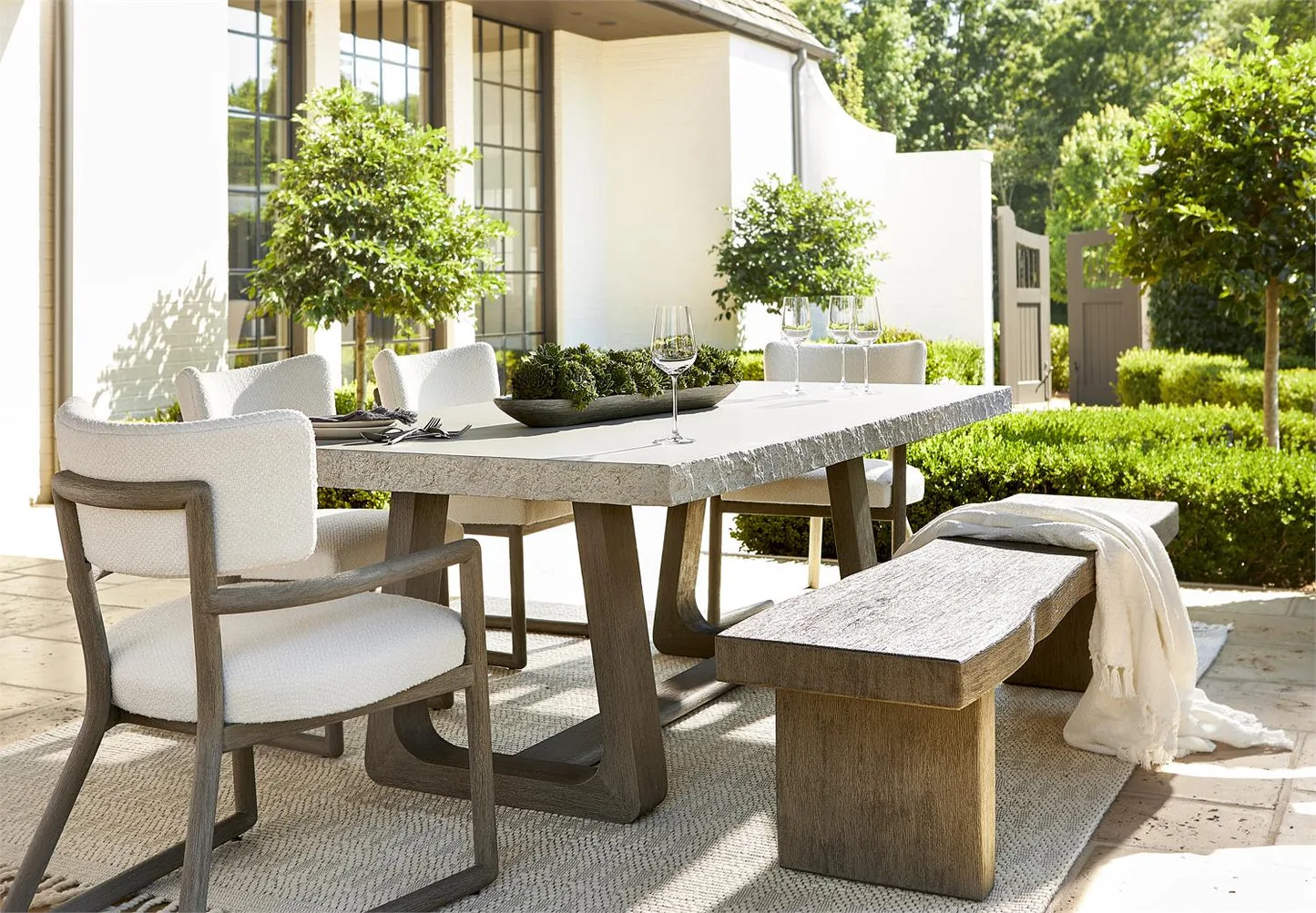
Most successful patios mix materials. A teak table may sit with aluminum chairs. A woven lounge can use a stone-topped table. A metal dining base can be softened by outdoor upholstery and planting. Matching every frame can make the space feel like a catalog spread rather than a room that grew into itself.
Start with the biggest job. For dining, that may be a table with enough room to pull out chairs and serve comfortably. For lounging, begin with the seat you want to spend an hour in, then add side tables and light. The outdoor room guide can help you decide how the seating, circulation, and focal point should work before you choose every finish.
Then layer in the conditions that make the furniture useful. The patio shade guide is useful for daytime comfort, while patio lighting ideas can help the room hold together after sunset. For cooler nights, plan warmth around the seating area with the patio heater placement guide, not as an object added after the furniture has already claimed every inch of the terrace.
9. A simple care routine protects the investment
Outdoor furniture lasts longer when maintenance is ordinary rather than heroic. Brush off debris, rinse away salt or pollen, wipe up spills, and keep feet from sitting in standing water. On wood, follow the finish or weathering plan you actually want. On metal, look for scratches early. On woven pieces, clear leaves from the weave. On cushions, let them dry before covering or storing them.
It also helps to buy a little less, but better. A patio does not need every possible piece of furniture to work well. It needs the right seats, a useful surface, a clear path, and the layers that make people stay outside longer. Choosing materials with that in mind means the room can age gracefully instead of becoming a collection of replacements.
Choose patio furniture that belongs to your home
Home Crush can help you bring the materials, scale, comfort, lighting, and outdoor conditions together before you commit. Explore outdoor furnishings, see patio furniture in Santa Barbara, or work with the design team on an outdoor room that feels right in every season.
Frequently asked questions
What is the best material for patio furniture?
The best material is the one that suits the patio's exposure and the amount of care you want to give it. Aluminum is often a strong choice for movable pieces, teak brings warmth and character, woven resin can soften a lounge, and recycled plastic can be useful where easy care matters most. The frame, joinery, cushions, and cover plan matter as much as the material name.
Does patio furniture rust near the ocean?
Iron and untreated steel can rust quickly in salt air, while aluminum does not rust in the same way. Even materials that handle moisture well benefit from regular rinsing and attention to damaged finishes. In a coastal setting, choose a well-made outdoor finish and make cleaning part of the routine rather than waiting for a problem to appear.
Is teak good for outdoor furniture?
Teak is a classic outdoor choice because it is dense and naturally suited to exterior use, but it is still wood. It will weather over time, and its color can change without care. Choose it when you like the material enough to accept that it will develop character, then follow the maker's cleaning and maintenance recommendations.
What fabric is best for outdoor cushions?
Look for outdoor-rated fabric, quick-drying cushion construction, and covers that can be cleaned without drama. A beautiful fabric is only useful if it can handle the way the patio is used. Before ordering, ask how the cushion drains, whether the covers are removable, and what the maker recommends for regular cleaning.
Should patio furniture be covered?
A cover can protect furniture from dust, rain, and seasonal debris, but it should fit well and allow air to move. Covers are most useful when the furniture is dry before they go on. For daily use, a simple routine of brushing off debris, rinsing salt or pollen, and storing loose cushions can be easier than covering every piece after every gathering.
Related posts
Outdoor Living
Patio Shade Ideas for a Cooler, Better-Looking Space
A practical guide to choosing patio shade that suits the sun, the structure, and the way you actually spend time outside.
Read articleOutdoor Living
Patio Lighting Ideas for Evenings Outside
A practical guide to layering patio light for dinner, conversation, safe movement, and an inviting after-dark glow.
Read article
Outdoor Living
Patio Heater Placement for a Better Outdoor Room
A practical guide to placing outdoor heat where people gather, while keeping the patio comfortable, clear, and safe.
Read articleOutdoor Living
Outdoor Living Room Ideas That Feel Like Home
A designer-minded guide to planning an outdoor room with comfort, flow, shade, light, and a point of view.
Read article