
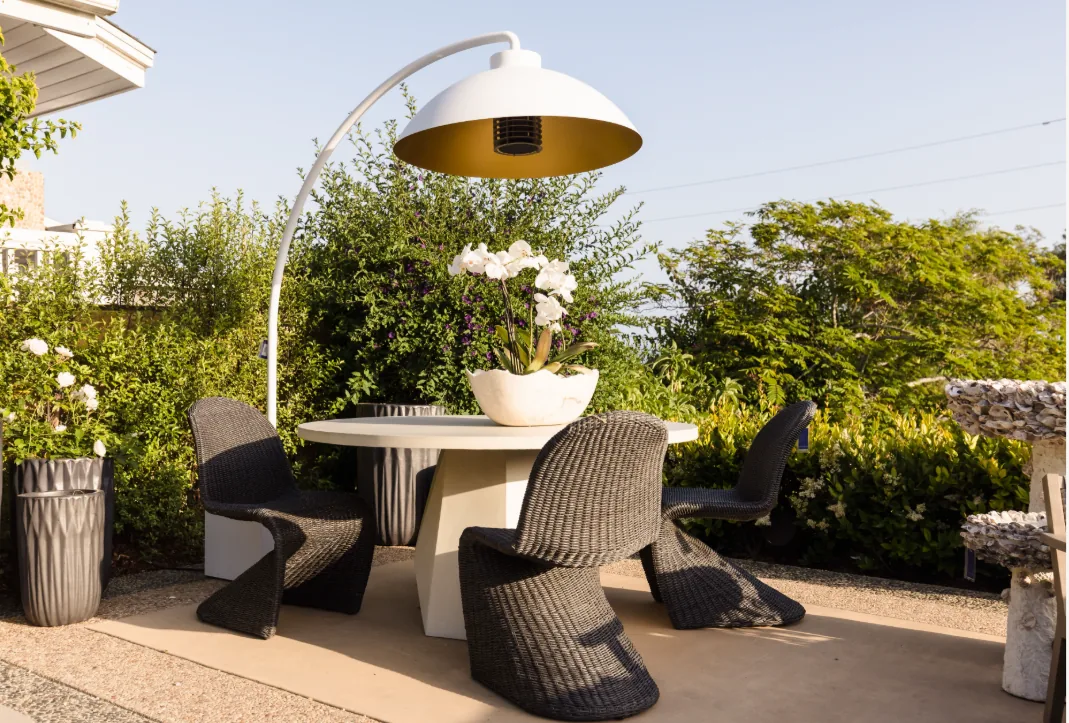
An outdoor rug is not there to cover a patio. It gives a group of furniture a centre of gravity. When it is sized well, a sofa, chairs, and a table feel like one place to settle in. When it is too small, every piece seems to be standing on its own, which is a surprisingly expensive way to make a good patio feel unfinished.
The useful place to start is not the edge of the deck or terrace. Start with the furniture, the people using it, and the clear routes they need. Measure the seating or dining arrangement at its widest working position, then choose a rug that supports that footprint without getting in the way of a door, step, grill, or pathway. This outdoor rug size guide makes that decision a little less guessy.
Measure the living zone, not the whole patio
A patio can be generous while the usable seating zone is modest, or the reverse. Take the length and width of the grouping you want to create, including the coffee table, side tables, and chairs in the position people actually use. For a dining setting, pull the chairs back first. The rug needs to support the moment someone gets up from the table, not just the tidy version photographed with every chair tucked in.
Mark the footprint with painter's tape, newspaper, or a length of cord before ordering. Stand at the door, walk around the furniture, and open every nearby gate or slider. This low-tech rehearsal catches the things a measuring tape misses: the coffee-table corner that narrows the route, the chair that scrapes the rug edge, and the doorway that needs a little more breathing room.
It also helps to note water paths and places where leaves collect. An outdoor rug needs to suit an outdoor life. Keep it out of the path of standing water and choose a construction that is made for the exposure your patio gets. IKEA's outdoor rug guide makes the same essential point: a rug used outside should be intended to handle the weather, not simply moved outdoors because it looked good in the living room.
Use the furniture to choose the size
Think of the rug as the floor of one outdoor room. It does not need to run wall to wall, and it should not become an obstacle course. The best size is usually the one that connects the furniture without swallowing every available inch of hardscape.
- For a small bistro set: a 3-by-5, 4-by-6, or 5-by-7 rug can frame two chairs and a small table, provided the chairs do not teeter on and off the edge.
- For a compact loveseat and chairs: a 5-by-8 or 6-by-9 rug often creates a real seating zone. Aim to place at least the front legs of the seats on the rug.
- For a sofa and two chairs: an 8-by-10 is a common starting point, with a 9-by-12 giving the group more composure when the patio allows it.
- For a sectional: begin with the outside dimensions of the sectional, not the empty space in its centre. A 9-by-12 or 10-by-14 is often more convincing than a smaller rug stranded under only the coffee table.
Those are starting points, not laws. A deep outdoor sofa, wide club chairs, or a low chaise can change the answer quickly. The familiar indoor rule still helps: the rug should be at least as wide as the main sofa, and the front legs of the surrounding seats should land on it. Lowe's offers the same front-leg guidance in its area rug sizing advice, which is a useful check when an arrangement feels almost, but not quite, settled.
Give outdoor dining chairs room to move
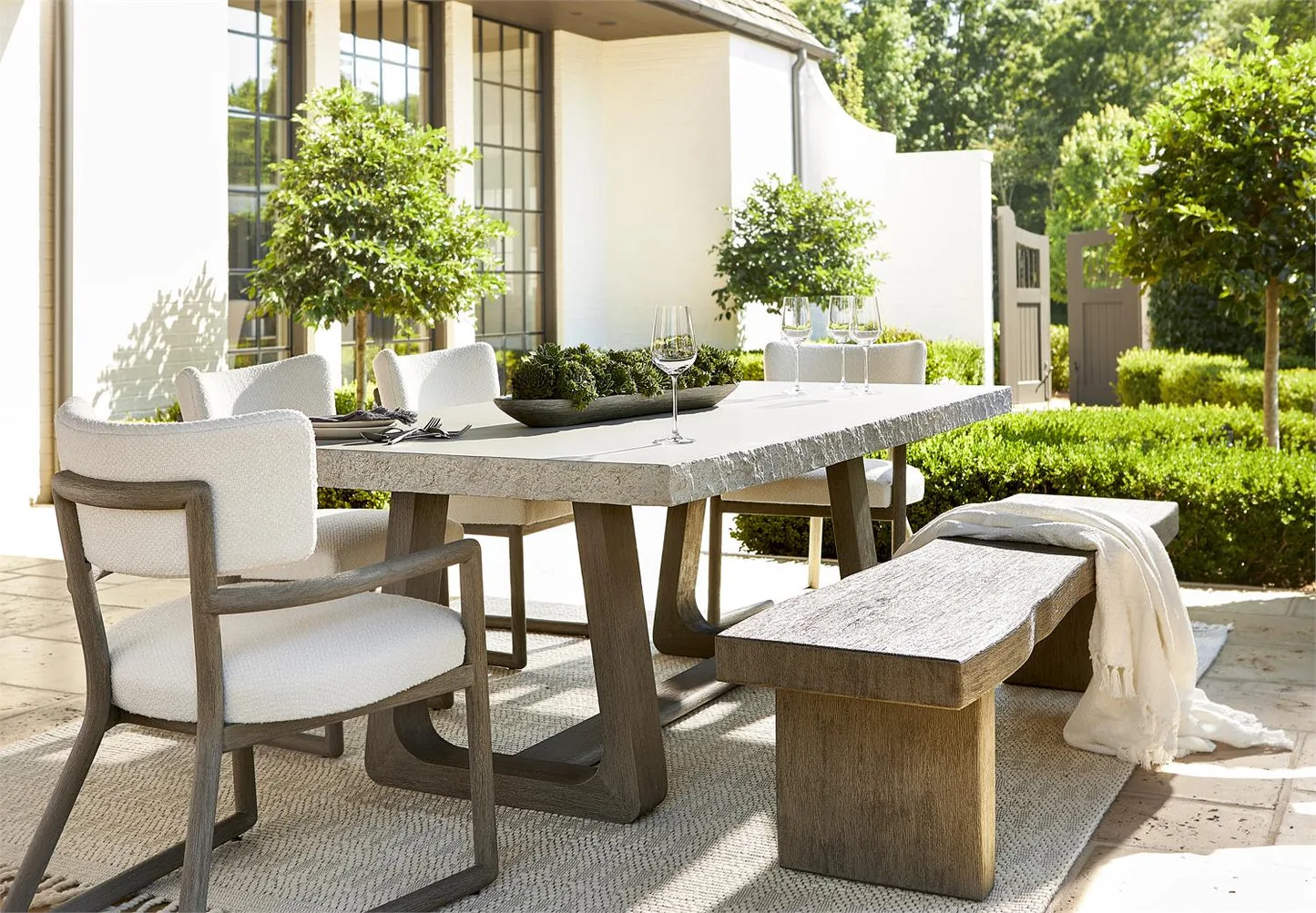
Dining is the layout where undersizing causes the most daily annoyance. A chair should stay on the rug when it is pulled out, otherwise it catches the edge each time someone sits down. Measure the table, then add room for a chair to move back comfortably on every side. A practical baseline is around 24 inches of rug beyond the table edge, with more room if the chairs are deep, have arms, or need a wider route behind them.
A four-seat round or square table may work well on an 8-by-8 or 8-by-10 rug. A long rectangular table for six often needs an 8-by-10 or 9-by-12. For a larger table, do not assume one enormous rug is automatically the answer. Check whether the dining group and lounge are better as two distinct zones, especially on a long deck or expansive terrace.
Shape can help, but it comes second to clearance. A round rug can be lovely under a round table if chairs still stay supported. A rectangular rug usually makes the most sense under a rectangular table because it follows the chair movement. The published size guidance from Outer similarly prioritises chair clearance over a perfect shape match, which is the sensible order of decisions.
Leave a clear edge around doors, steps, and pathways
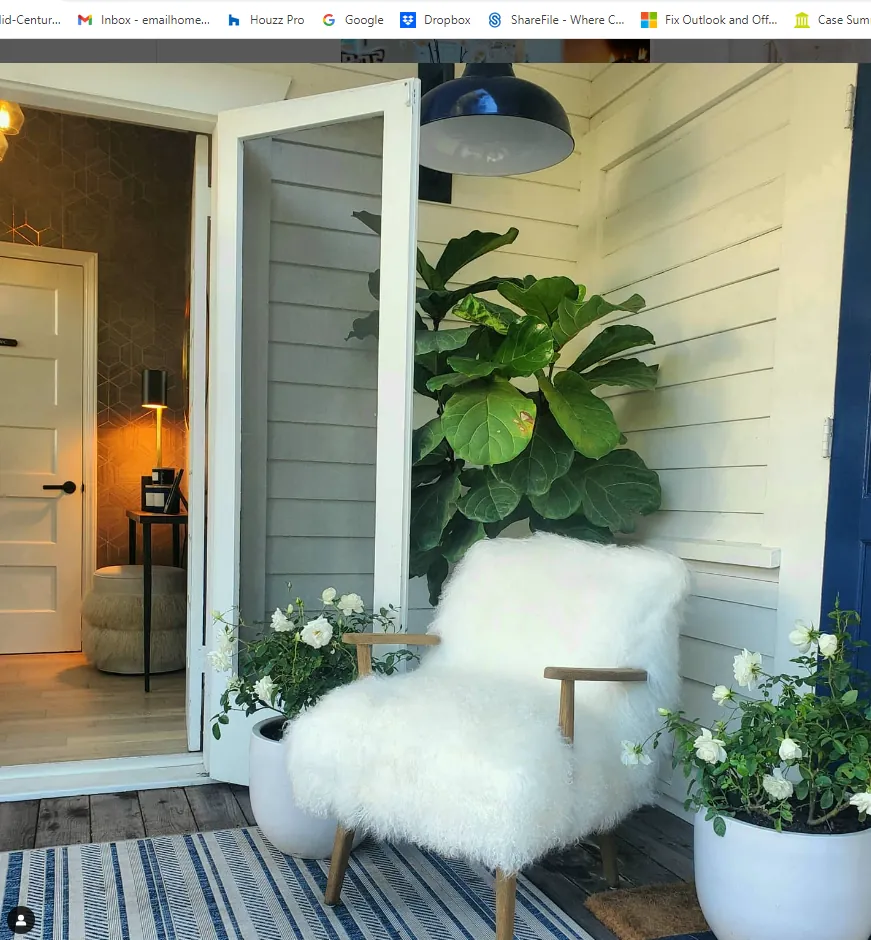
Open-air rooms need circulation more than they need a perfectly centred rectangle. Keep a clear approach to sliding doors, steps, pool gates, grills, and railings. Check door swings in both directions. If a rug must sit close to a threshold, choose a low-profile option and make sure the edge lies flat, but give the doorway more space whenever you can.
On a balcony, that may mean a narrow runner beside a compact pair of chairs rather than a rug that reaches every railing. On a large deck, it may mean two rugs: one grounding the dining table and another defining the sofa group. Breaking up a large surface this way is not a compromise. It makes each activity legible and lets the walkways stay easy.
Do not choose a rug that ends at the exact edge of a step or patio. A little visible floor around the layout gives the whole setting relief and makes it easier to spot the change in level. The aim is a room that people can use without thinking about where their feet are going next.
Know when to size up, size down, or use two rugs
If you are caught between two standard sizes, begin with the larger option only when it improves the furniture relationship without compromising circulation. A larger rug is helpful when a sofa or chair is left hovering just beyond the edge, when the coffee table feels isolated, or when the main seating group needs a clearer boundary. It is not helpful when it runs into a door swing, turns a stair landing into a narrow strip, or makes a compact balcony feel wall-to-wall.
Size down when the patio itself needs more visible breathing room, but do not solve that by placing a tiny rug under only the coffee table. In that case, a smaller but complete furniture grouping, a different arrangement, or no rug at all may be the better answer. A rug should support a room, not perform a rescue operation for furniture that is simply too crowded.
Use two rugs when the outdoor space has two genuine jobs. A dining table and a lounge set often want different dimensions, different surfaces underfoot, and different routes around them. Matching or complementary rugs can make the zones feel related without forcing a single rectangle to cover an entire deck. Keep a clear gap between the two so the patio reads as a sequence of comfortable places rather than one oversized carpet.
Choose material after the layout is working
Once the dimensions make sense, choose a rug built for the particular exposure. A covered porch, a windy roof deck, and a poolside patio ask different things of a textile. Look for an outdoor-rated material that can be cleaned according to its maker's instructions, lies flat, and feels appropriate under bare feet. A low profile tends to make chair movement easier, while a more textured weave may bring more comfort to a lounge area.
Colour and pattern can do some useful work, too. A mid-tone, patterned rug is forgiving under a dining table or near a garden, while a quieter solid can let more sculptural furniture take the lead. Let the scale of the pattern match the size of the rug. A tiny repeat can look busy over a large terrace, while an oversized pattern can feel heavy in a small balcony corner.
Think through care before falling for a colour. The outdoor furniture care guide has a useful seasonal routine for keeping an outdoor room ready to use. A rug should fit that routine, not turn it into a weekly project. If it will receive salt air, pollen, pet traffic, or lots of al fresco dinners, a practical, easy-to-clean option is usually the better luxury.
Two layouts that solve most patio decisions
The conversation layout: Arrange the sofa or loveseat facing the chairs, with a coffee table inside the grouping. Choose a rug wide enough to catch the front legs of the seating and long enough to extend past the coffee table. If the rug only sits under the table, go up a size. It is usually the quickest way to make a disconnected group feel intentional.
The dining layout: Centre the table on the rug, then pull out every chair. If any rear chair legs leave the rug, enlarge the rug or rethink the furniture spacing. Keep the path from the house to the table open, and resist pushing the whole arrangement hard against a wall just to make a rug fit. Comfort comes from usable clearance, not from forcing every square foot into service.
For a patio that does both, treat the seating and dining areas as separate rooms. Use two rugs when that gives each group the size it deserves. Then tie them together with a shared colour, finish, or lighting plan rather than trying to force one giant rug beneath a collection of unrelated furniture.
Try the full arrangement before you commit
A rug decision becomes much clearer when you test it at full scale. Tape the likely dimensions on the patio, then live with the outline for an afternoon. Pull out a dining chair, carry a drink from the kitchen, open the door, and take the route guests will take. If the boundaries feel tight before a rug arrives, they will feel tighter afterward.
That test also reveals whether the furniture itself needs a better arrangement. The outdoor living room guide can help you work from the way the space is used, while the patio furniture materials guide helps balance look, exposure, and maintenance when you are selecting new pieces. A rug is a finishing layer, but it is also a very good tool for deciding where an outdoor room begins and ends.
Build an outdoor room that feels considered from the ground up
Home Crush can help you choose outdoor furnishings that fit the scale, exposure, and everyday rhythm of your patio or terrace. Visit outdoor furniture in Santa Barbara, explore patio shade ideas, or work with the design team to make the whole space feel cohesive.
Frequently asked questions
What size outdoor rug works under a patio sofa and two chairs?
An 8-by-10 rug is often a useful starting point for a sofa, two chairs, and a coffee table, but measure the actual arrangement before buying. The rug should be at least as wide as the sofa and should catch the front legs of the seating, without interrupting a doorway or the route through the patio.
How much larger should an outdoor rug be than a dining table?
Measure the table with every chair pulled back as someone would when standing up. A practical starting allowance is about 24 inches beyond the table on every side, then check the result against the available walkway and the rug sizes you can actually buy.
Should all outdoor furniture legs sit on the rug?
All legs on the rug creates a generous, composed look when the patio has room. In a smaller seating arrangement, keeping at least the front legs of the sofa and chairs on the rug is usually enough to connect the group without crowding the space.
Can an outdoor rug go right up to a door or step?
It is better to leave a clear, stable approach to doors, steps, grills, and railings. Check a door's full swing and make sure a rug edge will not become a place where people catch a foot, drag a chair, or block drainage.
What outdoor rug shape should I choose?
Let the furniture arrangement lead. A rectangular rug generally suits a sofa or long dining table, while a round rug can make sense under a round table or in a compact conversation corner. A shape that supports the footprint is more useful than one chosen only to echo the patio outline.
Related posts
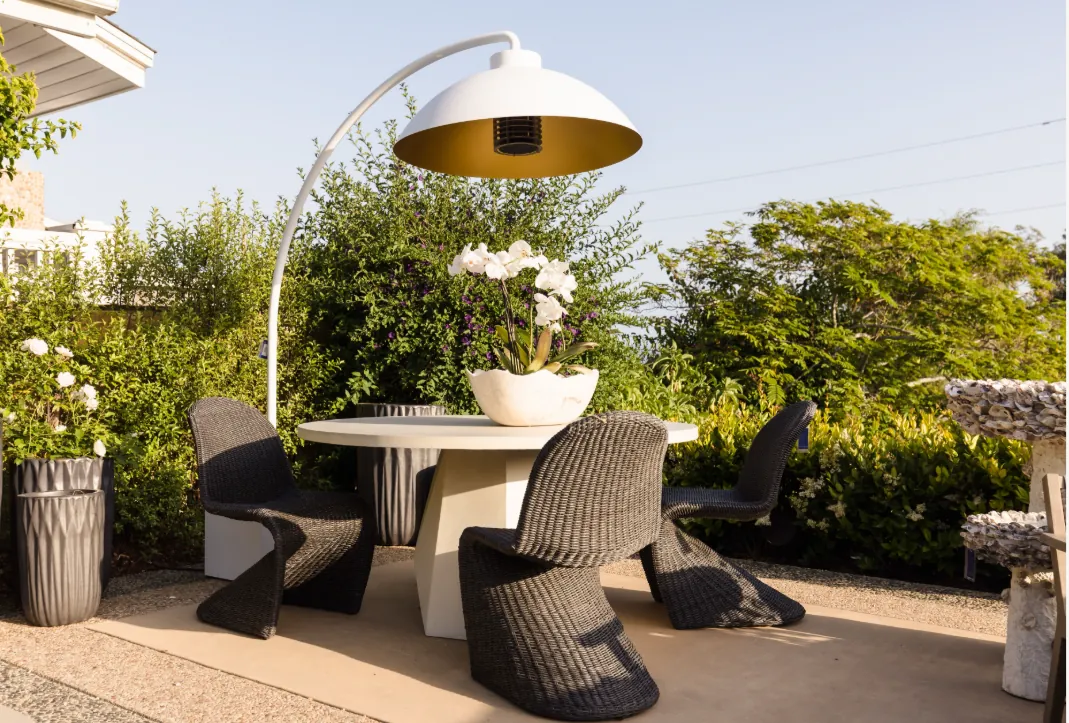
Outdoor Living
Patio Furniture Materials: What Works Where
A practical guide to choosing patio furniture materials for the sun, salt air, maintenance, comfort, and the way you live outside.
Read article
Outdoor Living
Patio Shade Ideas for a Cooler, Better-Looking Space
A practical guide to choosing patio shade that suits the sun, the structure, and the way you actually spend time outside.
Read articleOutdoor Living
Patio Lighting Ideas for Evenings Outside
A practical guide to layering patio light for dinner, conversation, safe movement, and an inviting after-dark glow.
Read articlePhotography via Unsplash.