
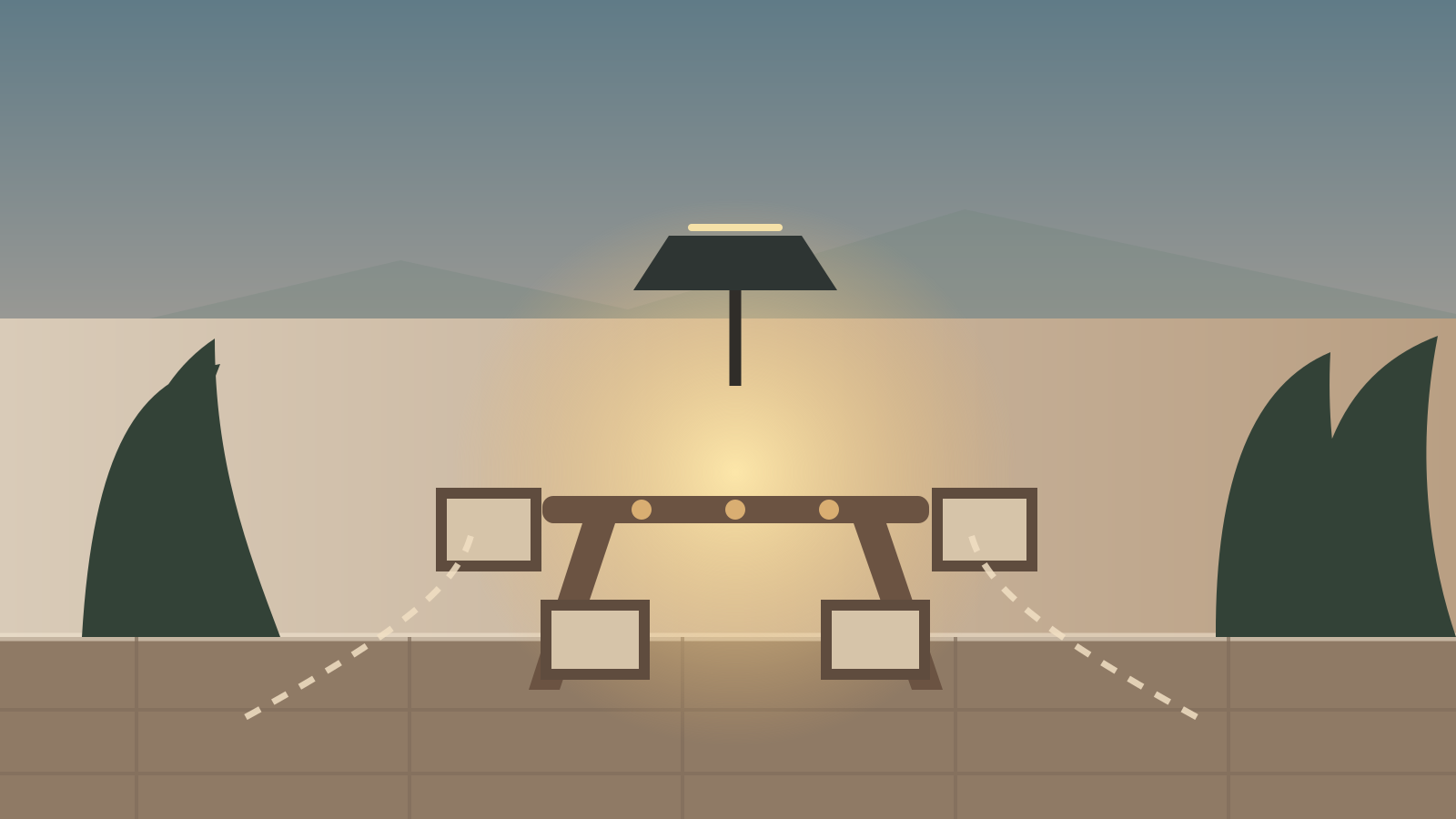
The best patio heater is rarely chosen by standing in a showroom and comparing the largest number on a box. It is chosen by looking at the real moment you want to improve: dinner stretching past sunset, a pair of chairs by the garden, or a covered terrace where everyone gathers when the evening turns cool. The useful question is not “How much patio can I heat?” It is “Which seats do I want to make more comfortable?”
That small shift makes a better decision. Outdoor warmth is affected by wind, openness, the roof or sky above, the position of furniture, the kind of heat involved, and the exact product instructions. A heater that looks right in an inspiration image can still be wrong for the structure, circulation, power, or daily rhythm of your own patio.
This guide puts the room first. It helps you narrow the choices before you fall in love with a form, then points out the checks that deserve an answer before anything is ordered, mounted, or moved into place.
Begin with the gathering, not the whole yard
Walk outside on an ordinary evening and notice where people actually settle. It may be a six-seat table, the corner of a sectional, or two chairs that catch the last of the light. Mark that small comfort zone first. There is little value in trying to heat empty paving while the people at the table remain chilly.
Next, pull out the chairs as they would sit during dinner. Open the nearest door. Walk the route someone takes with a tray, a glass, or a sleepy child at the end of the night. A well-chosen heating feature should support those movements, not force everyone to weave around it. This is why a heater needs a genuine home in the layout, rather than a temporary place that changes whenever guests arrive.
Take a few simple measurements and photographs of the proposed spot. Include the floor, the finished ceiling or cover, nearby walls, furniture, doors, and the seats you hope to improve. Those details make it easier to compare options honestly and much easier to have a useful conversation with an installer or design professional.

Read the patio as a heat problem
An open deck, a sheltered courtyard, and a roofed terrace can all have the same dimensions on paper while feeling completely different after dark. Wind is especially influential. It can make an exposed corner uncomfortable even when a nearby protected wall feels calm. Spend time in the seats you care about at the hour you hope to use them. Notice whether the breeze arrives from one side, whether warmth can drift away, and whether a screen, planting, or a different furniture position would improve the comfort of the room itself.
Think in zones rather than a single blanket of heat. A dining table and a lounge may each deserve their own approach. In a larger or unusually shaped patio, two considered zones can feel more even and more relaxed than one oversized feature aimed at everything. The goal is not maximum output. It is a setting where people can sit naturally without crowding toward one hot spot.
Any coverage figure is only a starting point. Manufacturer guidance is written for a specific product and may depend on how it is positioned, mounted, and used. Treat it as part of a conversation with the real room, not as a replacement for one.
Choose the heating approach before the silhouette
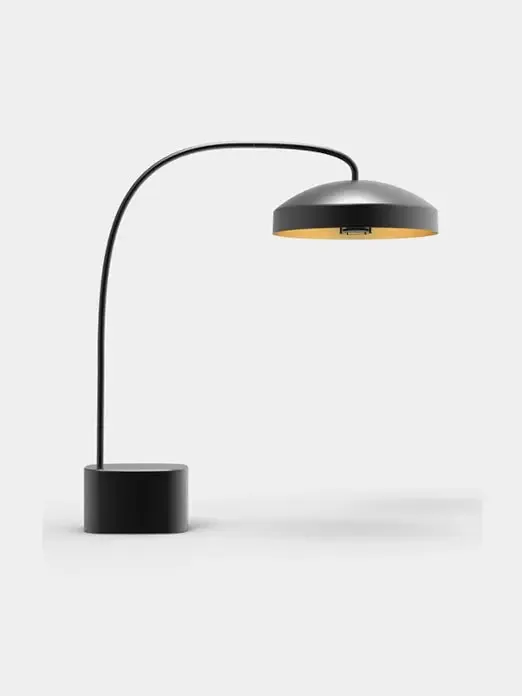
Patio heaters can use different fuels and deliver warmth in different ways. That is more important than whether the form is slender, sculptural, portable, or discreet. A product may be freestanding, wall-mounted, ceiling-mounted, or suspended. It may be powered electrically or use a fuel source. Each arrangement brings a different set of requirements for the location, installation, maintenance, and everyday use.
Electric radiant options are often considered where the aim is focused outdoor comfort without an open flame. They can make sense when the site can support the correct outdoor-rated equipment, electrical work, mounting arrangement, and clearances. Their value is not that electricity makes every setting simple. The exact appliance, connection, weather exposure, and instructions still matter.
Fuel-burning outdoor heaters require their own careful evaluation. They are not interchangeable with electric systems, and no patio heater should be treated as an indoor room heater. The U.S. Consumer Product Safety Commission’s indoor heating guidance warns against using outdoor heaters inside a home because fuel-burning equipment can create dangerous carbon monoxide buildup in enclosed spaces. A garage, a sunroom, or a partly enclosed porch is not an automatic exception. Start with the product label and current instructions, then the actual setting.
Home Crush’s electric patio heater guide explains the planning questions around seating, structure, power, and light in more detail. The point is not to pick a team. It is to choose the kind of comfort that the patio can honestly support.
Decide whether the floor needs to stay clear
A freestanding heater can be appealing when the furniture arrangement changes, the patio is open, or you want a feature that is not tied to one permanent location. It still needs a stable position outside chair pull-out, door swings, and the natural path through the room. If its best location moves every time the table is set, it may not be the right form for that layout.
An overhead, wall-mounted, or suspended option can preserve valuable floor space. That can be particularly attractive over a dining setting or beneath a generous outdoor structure. The tradeoff is that it asks more of the architecture. The roof, beam, wall, finish, electrical plan, mounting height, and required clear area all have to suit the exact model. Never infer those requirements from a product photo or a similar-looking installation.
This is where a visual plan earns its keep. Stand in the proposed location and look toward the house, then back toward the seats. Consider where a pendant, umbrella, shade, fan, planter, or throw might end up on an ordinary day. Our patio heater placement guide helps turn that walk-through into a practical layout decision.
Let the structure and the manual decide what fits
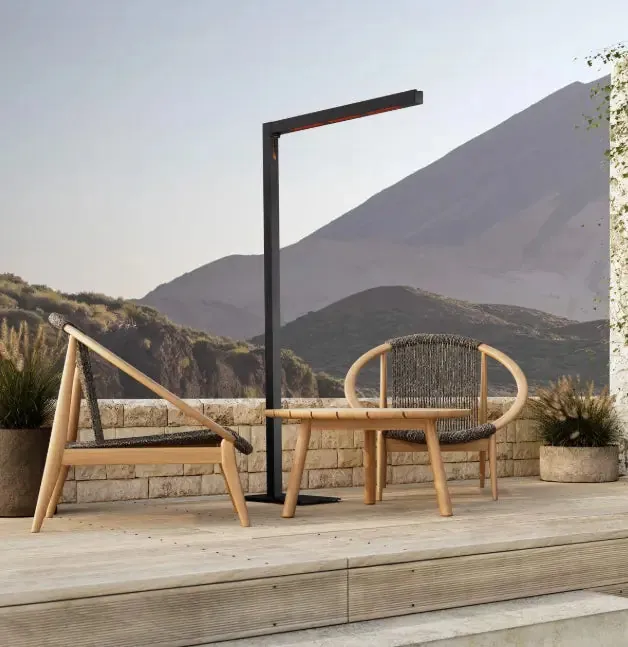
A beautiful patio can make a heater look inevitable. The product documentation decides whether it is appropriate. Before committing, read the current manual for the exact model and look for its intended setting, mounting direction, required clearances, power or fuel connection, weather conditions, service access, and any restrictions around overhead surfaces or nearby materials.
Do not borrow a clearance measurement from another product, even one that looks almost identical. Different models can have different requirements because of their orientation, output, enclosure, mounting kit, or tested use. If the proposed location works only by moving cushions, umbrellas, curtains, or dining chairs out of the way whenever the heater is used, it is not a settled plan.
For fixed work, involve the appropriate qualified professional early. That is especially useful when the plan includes new electrical capacity, structural mounting, a gas line, or a covered setting. The CPSC’s carbon monoxide safety information also makes a helpful distinction: an alarm adds protection, but it does not turn an unsuitable appliance or setting into an approved one.
Plan for light, furniture, and the after-dark mood
Warmth is one layer of an outdoor room, not the whole experience. A patio used for dinner still needs enough light to move safely, serve food, and find the way back inside. It may also need a softer layer that makes people want to linger. If a heating feature includes light, it can contribute to that atmosphere, but it should not be asked to solve every lighting need on its own.
The same goes for furniture. A beautiful chair pulled close to a heater in a photo may not be where someone sits when the table is in use. Place the furniture first, then test the heater footprint, circulation, and product requirements around it. Home Crush approaches an outdoor room as a whole, with seating, shade, lighting, warmth, and the view working together rather than competing for attention.

Use this buying checklist before you commit
A short, room-first checklist can keep the shopping process clear:
- Name the seats. Choose the dining or lounge zone you want to improve, rather than the total outdoor area.
- Watch the wind. Visit the setting at the time you plan to use it and note exposed edges and protected corners.
- Choose a form that respects circulation. Test chair pull-out, doors, walking paths, and the feature’s real footprint.
- Read the exact product instructions. Confirm intended location, clearances, mounting, connection, weather guidance, and service access.
- Plan the whole setting. Keep furniture, lighting, shade, surface materials, and the after-dark routine in the decision.
- Bring in qualified help when needed. Do not improvise fixed electrical work, fuel connections, or structural mounting.
When the answers feel clear, the choice usually becomes clearer too. When the plan depends on a generous interpretation of the manual or a room rearranged every evening, pause. There is almost always a better way to make the patio more comfortable.
Bring warmth into an outdoor room that already works
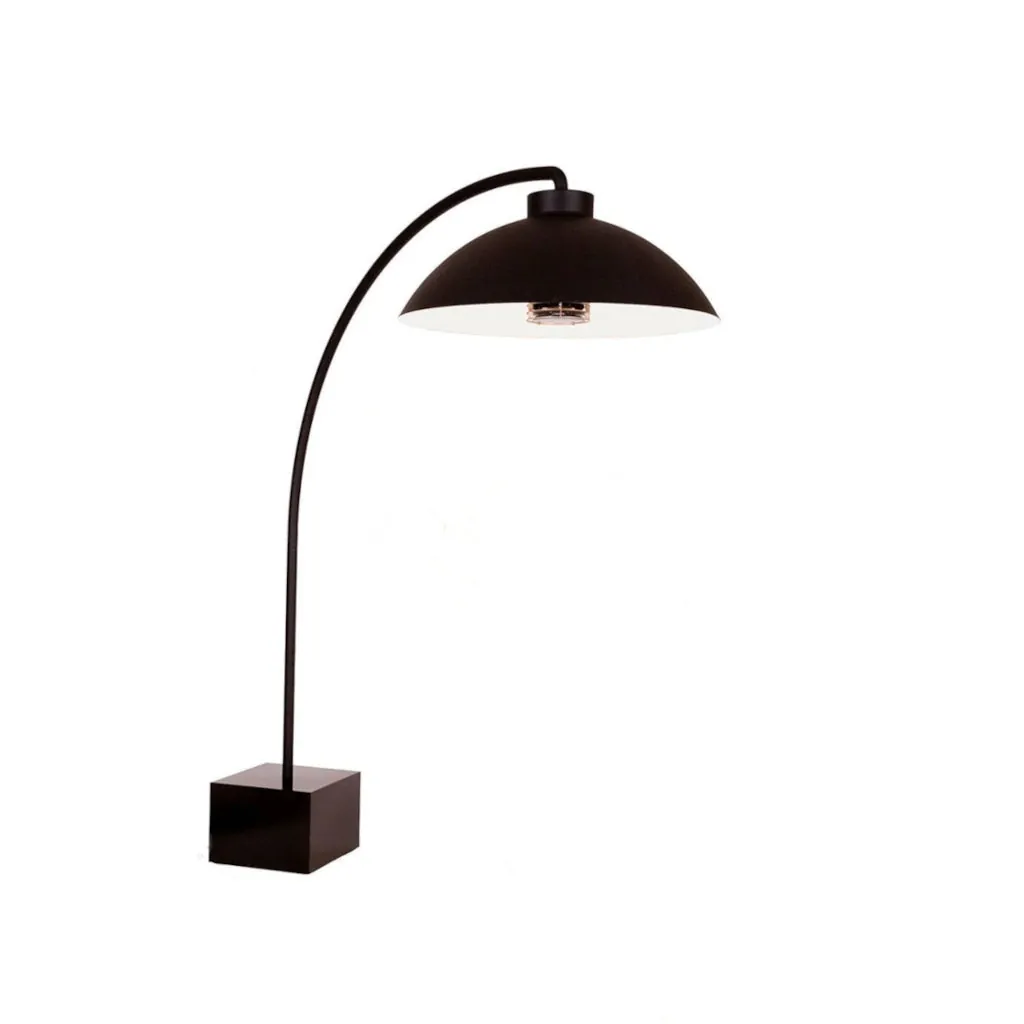
Home Crush can help you evaluate outdoor warmth as part of the room, alongside the furniture, light, shade, circulation, and architecture that shape an evening outside. Explore the Heatsail collection for considered outdoor heat-and-light options, review outdoor patio heater options, or work with the design team on an exterior setting that feels natural to use after dark.
For a fixed installation, continue with the outdoor heater installation guide. If you are still deciding where the feature belongs, return to the placement guide before choosing a model. A little room planning first makes every later decision more useful.
Choose the comfort zone first
Plan around the table, lounge, or corner of the patio that earns the most use. Then choose the heater form, power approach, and placement that make that moment more comfortable without disrupting the rest of the room.
Frequently asked questions
What is the first thing to consider when choosing a patio heater?
Start with the seats you want to make comfortable, not the total square footage of the yard. Note how the group uses the patio, where the wind reaches it, what is overhead, and the route people take through the space. Then compare those conditions with the exact product instructions.
Are electric patio heaters a good choice for an outdoor dining area?
An outdoor-rated electric radiant heater can be worth considering for a defined dining or lounge zone, particularly where a permanent plan can support the required electrical work, mounting, weather exposure, and clearances. The exact product documentation and site conditions decide whether it is appropriate.
Should I choose a freestanding or overhead patio heater?
A freestanding option can suit a flexible, open setting when it has a stable home outside circulation. An overhead option can preserve floor space, but it needs a structure, mounting location, electrical plan, and clearances that match the exact model. Neither format is automatically right for every patio.
How do I know whether a patio heater will be powerful enough?
Use any coverage guidance as a starting point, not a promise. Outdoor comfort changes with wind, openness, ceiling height, mounting direction, and the distance between the heater and the people using the space. Plan around the actual seating group and confirm the manufacturer guidance for the specific product.
Related posts
Outdoor living
How to Choose an Electric Patio Heater
A practical guide to choosing electric outdoor heat around the seats you use, the structure you have, and the evenings you want to extend.
Read articleOutdoor living
Patio Heater Placement for a Better Outdoor Room
A practical guide to placing outdoor heat where people gather, while keeping the patio comfortable, clear, and safe.
Read articleOutdoor living
Patio Heater Safety: A Practical Planning Guide
A practical patio-heater safety guide for checking the structure, clearances, footing, circulation, weather, and the exact instructions that apply to your model.
Read articleOutdoor living
Outdoor Heater Installation: Plan a Better Patio
A homeowner’s planning guide to outdoor heater installation, from the seating zone and structure to power, clearances, controls, and the final walkthrough.
Read articleIllustrations and photography from Home Crush and Heatsail.